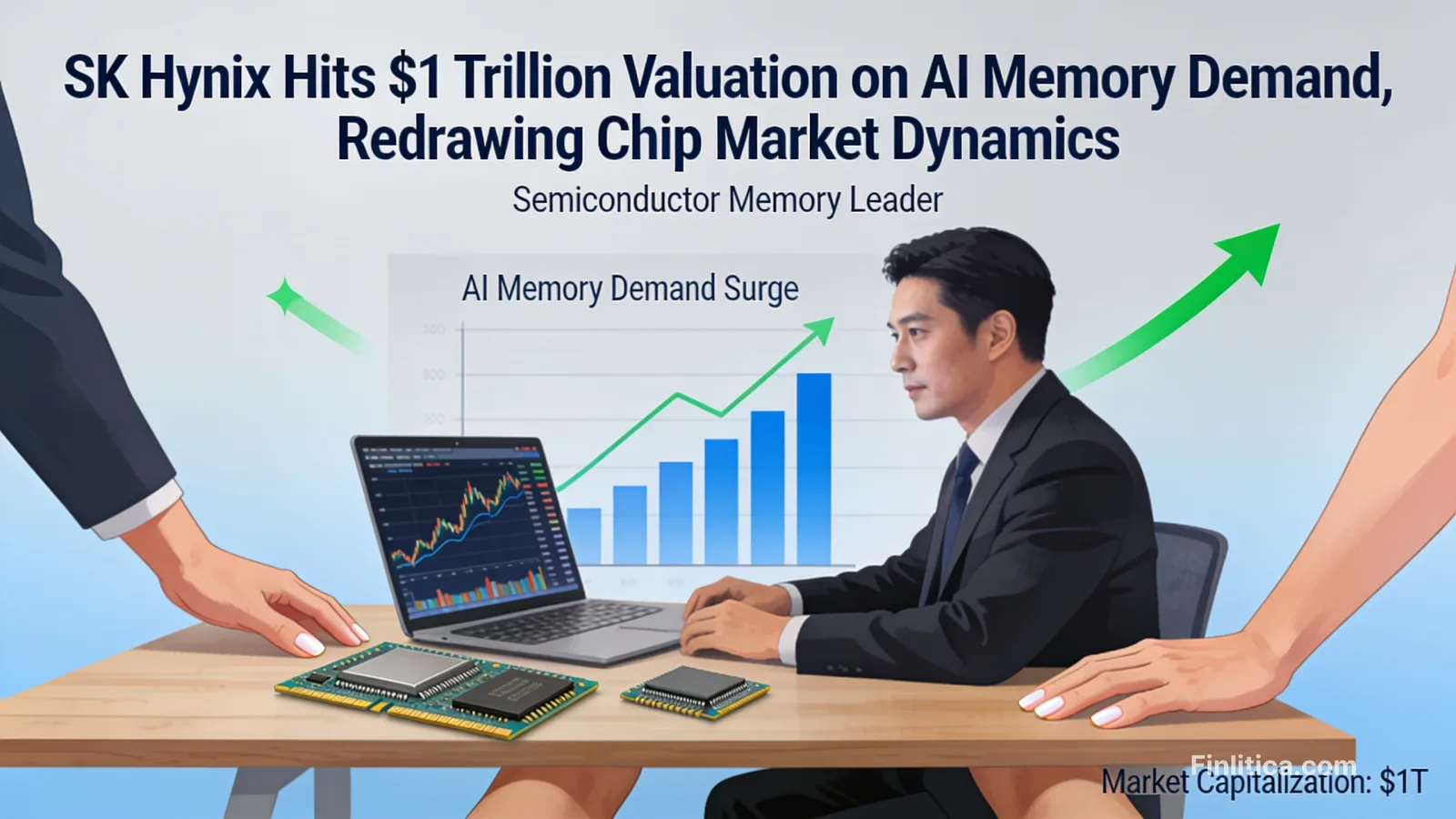
SK Hynix Hits $1 Trillion Valuation on AI Memory Demand, Redrawing Chip Market Dynamics
SK Hynix crossed a $1 trillion market capitalization amid surging demand for high‑bandwidth memory used in AI systems. The milestone underscores how AI spending is reshaping semiconductor stocks, supply chains, and investor positioning across global markets.
SK Hynix became the latest chipmaker to crest a $1 trillion market capitalization as investors bet on accelerating demand for high‑bandwidth memory used in artificial intelligence systems. The move highlights how AI infrastructure spending is reordering leadership within stocks and the broader market, with memory suppliers gaining pricing power and visibility that had been scarce during past cycles.
The company’s valuation surge reflects a tight supply backdrop for advanced memory and stronger earnings expectations. While broader markets remain sensitive to the Fed, inflation and rates, investors are rewarding firms that directly enable AI compute - and SK Hynix sits at the center of that build‑out through its leading position in HBM (high‑bandwidth memory).
What changed vs prior baseline
- HBM leadership turned into pricing power: SK Hynix’s share in leading‑edge HBM for AI accelerators has expanded to a majority of shipments, giving the company leverage in allocation and contract terms that was not present in prior DRAM cycles.
- Demand deepened from one‑off wins to multi‑year roadmaps: AI server deployments have shifted from pilot phases to multi‑year capacity plans, increasing visibility for memory content per server and sustaining orders across 2024-2026.
- DRAM pricing trend reversed: After a protracted downturn, contract prices for advanced DRAM and HBM recovered, with high‑end memory benchmarks rising by double digits year‑over‑year - a decisive break from the prior deflationary baseline.
- Capex discipline industry‑wide: Memory peers have kept wafer capacity tight while prioritizing HBM conversions, helping preserve supply/demand balance versus earlier oversupply cycles.
Key drivers behind the rally
Three numbers frame the shift. First, the $1,000,000,000,000 valuation underscores how far investors have repriced AI‑linked memory suppliers relative to traditional cyclical norms. Second, industry estimates point to HBM unit growth more than doubling year‑over‑year in 2024, reflecting a step‑function increase in memory content per AI accelerator. Third, share performance has compounded on that backdrop: SK Hynix has risen by well over 50% in the past year, outpacing broader semiconductor indices as orders for HBM3 and HBM3E tightened the supply chain.
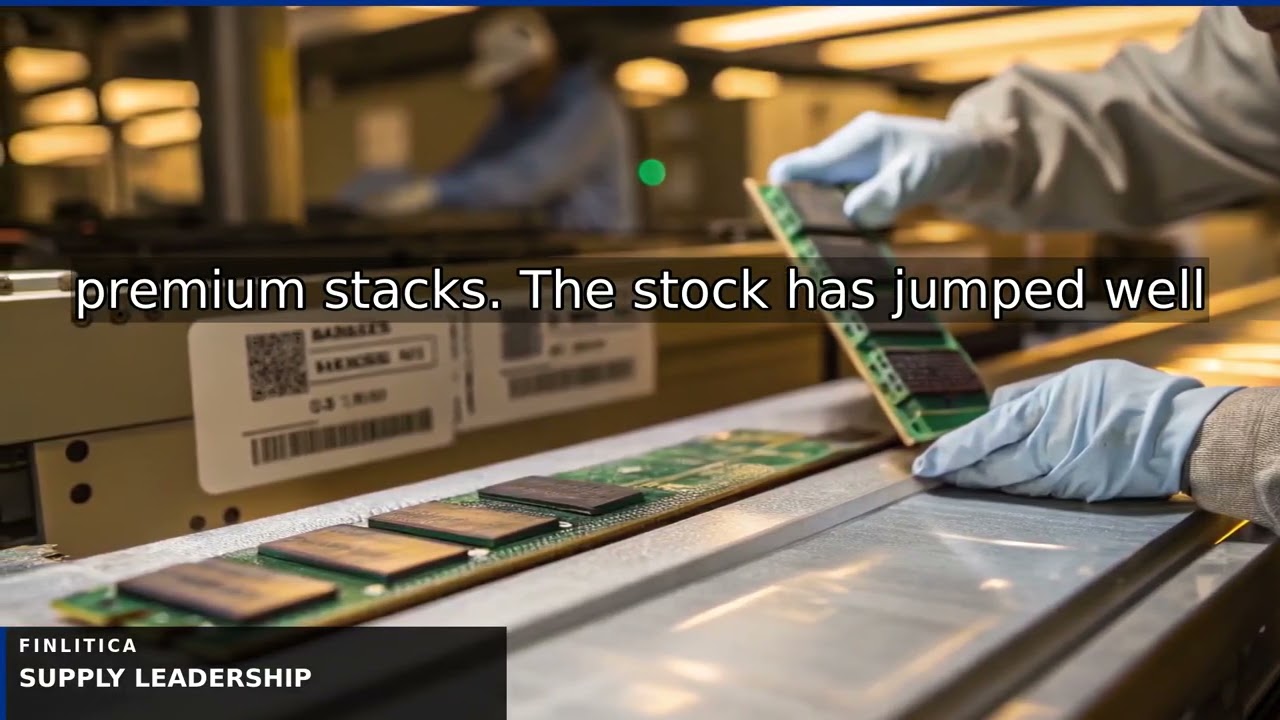
Those figures matter because they collectively describe a structural change: AI servers require multiple stacks of premium memory per chip, expanding the value captured by memory vendors. At the same time, conversion of conventional DRAM lines to HBM narrows available supply, supporting higher average selling prices and margin expansion.
Market implications
Equity investors
- Re‑rating of memory suppliers: The valuation reset suggests the market is treating leading HBM vendors less like pure cyclicals and more like infrastructure beneficiaries of AI demand, warranting higher multiples during periods of constrained supply.
- Broader sector rotation: Gains in AI memory can shift flows within semiconductors, favoring component makers tied to accelerators over legacy PC/mobile exposures. This could widen dispersion inside semiconductor ETFs that are cap‑weighted to AI leaders.
Credit investors
- Improved coverage and deleveraging capacity: Rising cash flow from premium memory can bolster credit metrics, potentially supporting spread compression or improved outlooks if sustained.
- Capex funding mix: If management keeps capital intensity focused on HBM conversions rather than greenfield expansion, free cash flow resilience may improve through the cycle, lowering refinancing risk.
ETF allocators and sector positioning
- Concentration risk: AI winners now represent a larger share of semiconductor and Korea‑focused indices. Allocators may need to reassess single‑name and factor exposures as a handful of suppliers drive index returns.
- Correlation shifts: AI memory names may trade more in line with accelerator demand and data center capex cycles than with legacy end‑markets, altering portfolio hedging dynamics.
Company fundamentals to watch
- HBM mix and yield: Higher HBM mix lifts margins, but yields and packaging throughput remain bottlenecks. Watch quarterly disclosures on HBM3/3E ramp and conversion rates from conventional DRAM.
- Pricing and lead times: Lead times for premium memory are a real‑time indicator of supply/demand tightness. Prolonged lead times typically translate to ASP support and backlog visibility.
- Customer diversification: Concentration in a small set of hyperscalers can elevate negotiating risk. Additional design wins broaden the order book and reduce single‑customer exposure.
Why it matters
SK Hynix’s ascent to a trillion‑dollar valuation reinforces a central market theme: AI infrastructure is redefining where value accrues in semiconductors. For investors parsing earnings, the mix shift toward premium memory, tighter supply discipline, and multi‑year AI server roadmaps are now core inputs to stock selection and risk management.
Risks and alternative scenario
- Supply catch‑up: If competitors accelerate HBM capacity faster than expected, pricing power could fade, pressuring margins and valuations.
- Normalization of AI server orders: A slower AI investment cadence or digestion phase could lengthen customer inventories, easing lead times and weighing on revenue growth.
- Manufacturing complexity: Yield challenges in advanced stacking and packaging could constrain shipments or raise costs, narrowing profitability.
- Macro sensitivity: Higher rates or a risk‑off shift across markets could compress multiples for growth‑sensitive semiconductor stocks, even if fundamentals remain sound.
Outlook and monitoring
Near‑term, the focus will be on shipment volumes of HBM3E, conversion ratios from standard DRAM, and evidence of multi‑year purchase commitments by hyperscalers. Investors should track quarterly guidance for capex, yield milestones, and ASP trends to gauge the durability of earnings revisions.
FAQ
What pushed SK Hynix to the $1 trillion mark?
Persistent demand for high‑bandwidth memory used in AI accelerators, constrained supply, and rising average selling prices collectively drove a rapid re‑rating of the company’s equity value.
How dependent is the story on AI?
Highly. AI servers carry significantly higher memory content than traditional servers. As a result, HBM growth and pricing are central to SK Hynix’s revenue mix and margin trajectory.
What could derail the momentum?
A faster‑than‑expected supply response, yield setbacks, or a pause in hyperscaler capex could pressure pricing and earnings. Macro headwinds that tighten financial conditions could also hit valuations.
What should investors watch next?
HBM shipment growth, customer diversification, and any signals on lead times or pricing in quarterly updates are the clearest indicators of whether elevated profitability is sustainable.
Sources & Verification
-
View sourceInvesting.comwww.investing.com