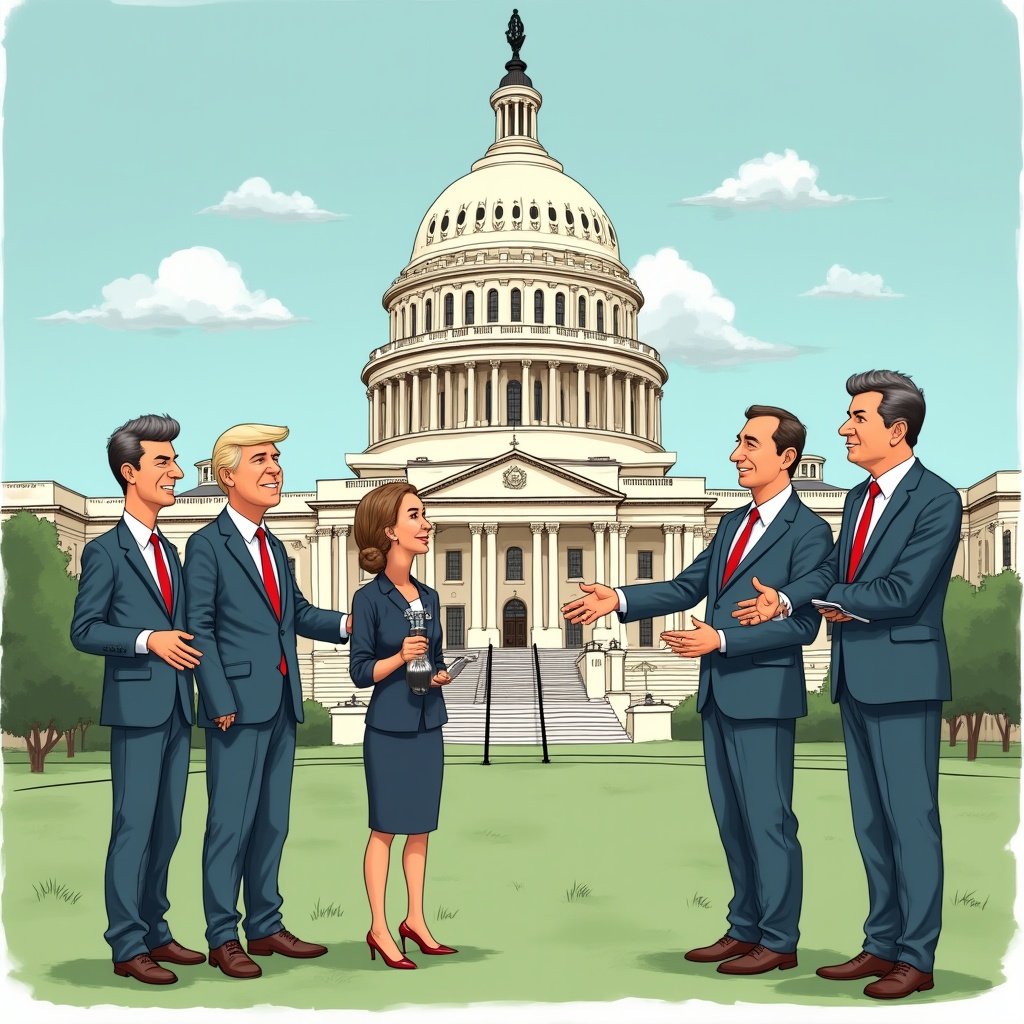
How an Assertive White House Became a Core Driver of Markets, Oil, and Rate Expectations
The presidency’s expansive use of executive authority is reshaping how investors handicap oil prices, interest-rate expectations, and sector earnings—placing policy moves alongside fundamentals in market playbooks.
A more assertive use of executive authority has pushed the presidency to the center of the economy, turning policy pivots into immediate market catalysts for stocks, oil, and rate expectations. For investors navigating markets, inflation, and earnings cycles, the White House is increasingly a first-order variable—affecting supply chains, energy balances, and regulatory posture across sectors from industrials to crypto and ETFs.
While Congress and independent agencies still set boundaries, the modern toolkit—sanctions, tariffs, emergency authorities, permitting decisions, and agency appointments—can alter prices and risk premia in days, not quarters. That speed changes how portfolios are hedged, how cash is deployed, and how earnings guidance is framed.
What changed vs prior baseline
- Policy can move faster than legislation: Executive actions such as tariffs, sanctions, and strategic reserve releases can hit commodity and currency markets within hours, compressing the window for portfolio re-positioning.
- Energy as a policy lever: Sanctions, licensing decisions, and potential Strategic Petroleum Reserve (SPR) releases have become tools to influence crude supply-demand balances and, by extension, headline inflation.
- Regulatory signaling shapes rate expectations: Although the Federal Reserve is independent, fiscal stance and regulatory tone shape inflation trajectories and growth, feeding into bond-market pricing for the policy rate.
- Cross-asset spillovers are stronger: Actions aimed at one sector—steel, technology, or digital assets—now propagate quickly into credit spreads, factor exposures, and ETF flows.
How policy channels transmit to markets
Oil and commodities
Sanctions and export controls can constrain supply, while waivers and licensing can ease it. OPEC and its allies still account for roughly 40% of global crude supply—a reminder that U.S. measures interact with external policy blocs. The SPR remains a credible shock absorber: its congressionally authorized capacity is about 714 million barrels, and emergency drawdowns have previously reached 180 million barrels over a single year, evidence of the scale at which policy can move physical markets.
For equities and credit, each $10 move in crude can alter sector earnings sensitivity, particularly for airlines, chemicals, and trucking on the cost side, and for exploration and production on the revenue side. Energy also feeds into consumer inflation; gasoline’s share of household outlays makes pump prices politically and economically salient.
Interest rates and inflation dynamics
The Fed targets 2% inflation and holds eight scheduled policy meetings per year, but markets discount rate paths continuously. Executive action that tightens or loosens supply constraints—through trade measures, permitting, or fiscal execution—can shift breakevens, term premiums, and the expected trajectory of real rates even without a change in the policy rate itself.
Appointments to key agencies (Fed Board, Treasury, energy and environmental regulators) also shape the policy mix that frames growth, inflation, and credit creation. Markets typically translate these signals into moves across the front end of the curve, financials, and rate-sensitive equity factors.
Trade, industrial policy, and earnings
Tariffs and quotas modify input costs and pricing power. For example, U.S. national-security tariffs implemented in 2018 placed levies of 25% on many steel imports and 10% on aluminum—illustrating how executive-linked measures can reprice materials costs across construction, autos, and capital goods. Similar levers—Buy American rules, export controls, and targeted subsidies—can tilt relative winners inside industries and across regions, with direct implications for earnings guidance.
Crypto and ETFs
While market structure decisions reside with independent commissions, White House priorities influence agency rulemaking and enforcement intensity. That can affect listing pipelines, ETF approvals or rejections, and compliance costs for exchanges and custodians. For crypto, regulatory tone intersects with a hard technical constraint—Bitcoin’s 21 million supply cap—making policy clarity a key determinant of volatility and institutional participation.
Why it matters
- Portfolio construction must account for policy velocity, not just economic data cadence.
- Cross-asset hedging is essential as energy, rates, and credit now react in tighter sequences to executive actions.
- Earnings dispersion widens when input costs and regulatory burdens shift quickly across sectors.
Market implications
- Equity investors: Expect higher factor rotation and dispersion. Energy and defense may see episodic tailwinds from supply constraints or procurement shifts, while rate-sensitive growth names react to changes in term premium and breakevens.
- Credit investors: Policy shocks can steepen curves and alter refinancing windows. Companies with commodity-linked cash flows or trade exposure may need wider liquidity buffers.
- ETF allocators: Anticipate brisk flows into hedging vehicles (energy, volatility, short-duration) around policy inflection points. Liquidity screens matter as spreads can widen when headlines hit.
- Macro and CTA funds: Faster, policy-driven trend formation in crude, FX, and front-end rates can open opportunities, but also raise whipsaw risk around waivers, court rulings, or legislative pushback.
Risks and alternative scenario
- Legal and judicial checks: Courts can stay or overturn executive actions, creating binary event risk and sharp reversals in affected assets.
- Geopolitical escalation: Tensions in energy-producing regions, including the Middle East, can overwhelm domestic policy levers and drive oil volatility beyond modeled ranges.
- Supply-chain rigidity: Even with tariff relief or licensing changes, physical capacity and logistics may limit the speed of price normalization.
- Fed-path misread: Markets may over-attribute moves in rate expectations to the White House; incoming data and Fed communications can re-anchor pricing abruptly.
- Policy fatigue and execution risk: Administrative bandwidth, Congressional oversight, and agency staffing can slow or dilute announced measures, muting market impact.
What investors can do now
- Scenario map policy levers with price elasticities—oil, base metals, semis, and shipping—to identify asymmetric exposures.
- Use layered hedges: combine sector ETFs, options on crude or rate futures, and quality tilts in credit to buffer headline risk.
- Watch agency calendars and court dockets in addition to economic releases to anticipate volatility clusters.
FAQ
Do presidents set interest rates?
No. The Federal Reserve is independent and targets 2% inflation, with eight scheduled meetings each year. However, executive actions can influence growth and inflation, which in turn shape market expectations for the path of rates.
How can executive actions move oil prices?
Sanctions, export licenses, and potential SPR releases can change effective supply or perceived scarcity. Because OPEC and allied producers account for around 40% of global output, U.S. moves interact with producer policy, amplifying or offsetting price effects.
Which sectors are most sensitive to rapid policy shifts?
Energy, industrials, airlines, autos, chemicals, and semiconductors are sensitive via input costs, permitting, and trade. Financials and homebuilders react through rates and credit conditions.
What does this mean for ETF investors?
Expect quicker rotations among sector and factor ETFs around policy headlines, and consider liquidity and tracking differences when hedging. Macro-oriented ETFs tied to oil, short-duration bonds, or volatility can serve as timing tools—but execution risk rises around legal or diplomatic developments.
Sources & Verification
-
View sourceCNBC Top Newswww.cnbc.com