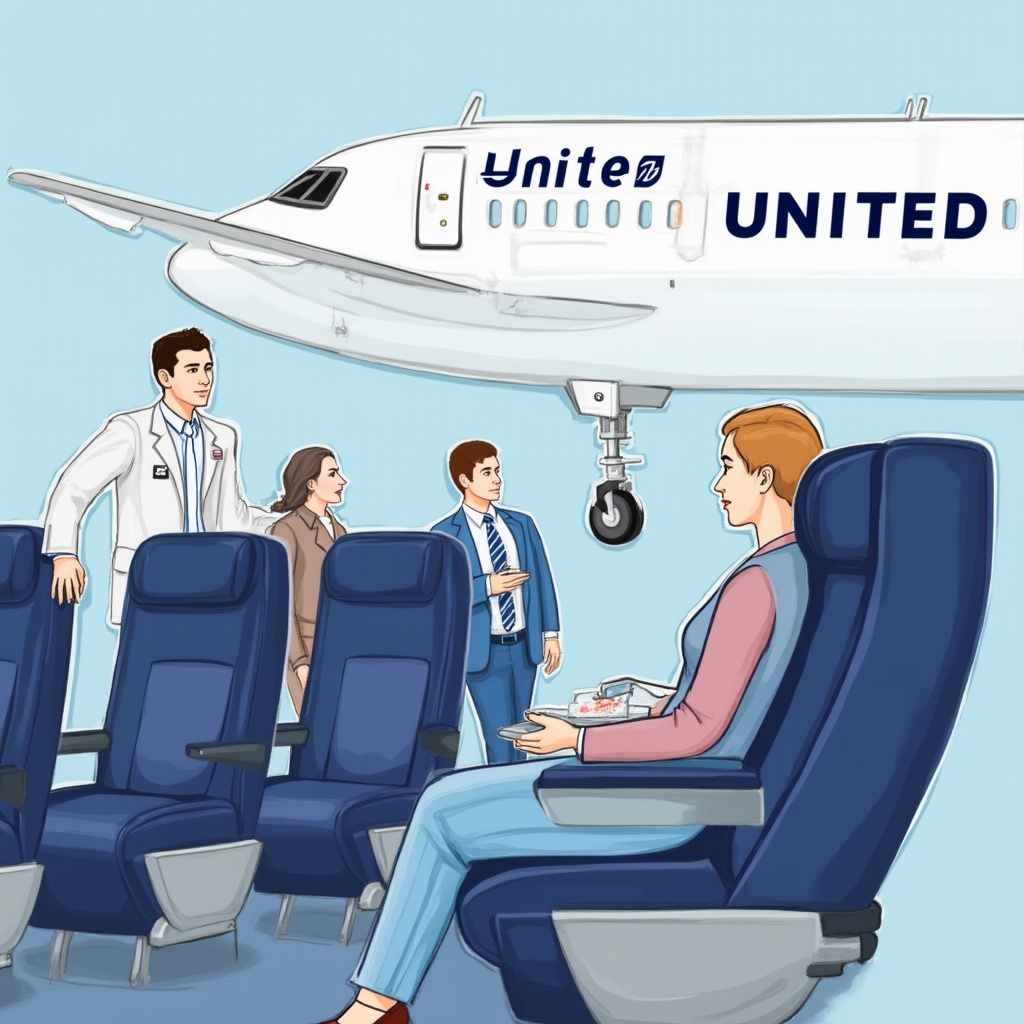
United Airlines expands premium cabins on smaller jets, trims economy rows to court high-spend travelers
United Airlines is overhauling cabins on select smaller aircraft to add more premium seating — including lie-flat options — while reducing economy rows, aiming to lift revenue quality ahead of upcoming earnings cycles.
United Airlines is redesigning cabins on select smaller aircraft to add more premium seating while removing some economy rows, a move aimed at capturing higher-yield demand from corporate and affluent leisure travelers. The shift toward bigger premium cabins is intended to strengthen revenue per seat and product differentiation in a competitive market, with management targeting travelers who will pay for comfort, flexibility, and amenities. For investors tracking the airline sector, the timing matters as carriers position into the next earnings season and a still-mixed travel economy.
The strategy includes premium seats that convert into a bed on certain aircraft, bringing lie-flat comfort to routes not always served by wide-bodies. United’s focus is on upgauging the product quality of smaller mainline and regional operations to win wallet share from high-spending customers who are increasingly sensitive to onboard experience and reliability.
What changed vs prior baseline
- More premium density on smaller jets: United is reallocating cabin space on select single-aisle and smaller-gauge aircraft—historically optimized for economy—to install additional premium rows, including lie-flat seats with 180-degree recline on designated routes.
- Fewer economy rows: The airline is removing a portion of standard economy seating to make room for larger premium cabins, shifting the mix toward higher-yield fare classes rather than maximum seat count.
- Product consistency push: The refresh is designed to reduce variability across fleets, so frequent flyers encounter a more predictable premium experience even on shorter or secondary markets.
- Network flexibility: With premium-capable smaller aircraft, United can place higher-comfort products on business-heavy routes that don’t support wide-bodies, improving match between demand and capacity.
Why it matters
Premium travel typically carries materially higher yields than standard economy. Industry fare data often show premium-class prices at roughly 2x economy on comparable routes, offering a powerful lever for margin expansion when demand is healthy. By rolling out lie-flat and larger premium cabins on smaller aircraft, United can broaden that yield advantage beyond core long-haul markets.
This approach also responds to competitive pressure from peers that have invested in upgraded cabins and from new entrants targeting high-spend travelers. A more premium-heavy mix can support revenue per available seat mile and smooth out volatility during periods of shifting leisure demand.
Market implications
- Equity investors: A higher share of premium revenue can lift unit revenues and mix, key inputs for valuation. Execution will be judged by how quickly the retrofit schedule translates into better PRASM and whether upgraded aircraft are deployed on routes that maximize returns. If successful, it can underpin multiple expansion relative to peers with slower product refresh cycles.
- Credit investors: Cabin densification toward premium can enhance cash generation and free cash flow resilience, supporting leverage trajectories. However, the upfront capital and short-term downtime during retrofits may modestly pressure near-term metrics, making timing and cost control central to credit views.
- ETF and sector allocators: Airlines with credible premium strategies can diversify revenue away from purely price-sensitive segments. Funds with significant airline exposure may see reduced earnings volatility if premium demand holds, though dispersion across carriers could widen based on execution speed and network fit.
Details and context
According to the company’s announcement on March 24, 2026, the upgrade program centers on winning more sales from travelers who value comfort and productivity features, such as expanded personal space and seats that can lie fully flat. By migrating elements of the wide-body experience onto smaller planes, United can deploy premium capacity on city pairs where demand is strong but volumes don’t justify twin-aisle service.
Smaller aircraft in U.S. networks often seat roughly 70–100 passengers depending on configuration; shifting even a few rows from standard economy to premium meaningfully tilts revenue mix. Because lie-flat seats provide a 180-degree sleeping surface, they can transform red-eye and mid-con routes into business-friendly options, potentially improving corporate contract performance and loyalty capture.
Retrofit programs of this kind typically roll out in phases to manage capital spending and minimize operational disruption. While each fleet sub-type can vary, airlines frequently plan cabin refreshes over multi-quarter windows so aircraft downtime stays within schedule buffers. That cadence is important to maintain utilization and protect load factors during the transition.
Risks and alternative scenario
- Demand elasticity risk: If economic growth slows or corporate travel budgets tighten, premium buy-up rates could soften, reducing the payoff from larger premium cabins.
- Execution and timing: Retrofit delays, supply chain issues for cabin components, or certification bottlenecks could push benefits later than planned while still incurring costs and downtime.
- Competitive response: Rivals may match or exceed premium offerings, compressing yield advantages and forcing additional promotions or loyalty spend to maintain share.
- Cost inflation: Higher labor or materials costs can erode expected margins from the refresh, especially if fares cannot be adjusted commensurately.
- Network mismatch: If premium-configured smaller aircraft are deployed on routes with insufficient high-yield demand, unit economics could underperform versus denser economy layouts.
What to watch
- Premium revenue mix and PRASM trends on routes receiving refreshed cabins.
- Retrofit pace versus plan and proportion of the smaller-aircraft fleet converted each quarter.
- Corporate travel indicators, including contracted share gains and close-in booking strength.
- Load factors and upgrade clearance rates to gauge pricing power and cabin balance.
FAQ
What is changing on United’s smaller aircraft?
United is reallocating space from standard economy to larger premium cabins on select smaller jets, including installing lie-flat seats on certain configurations to enhance comfort and attract higher-yield travelers.
Why prioritize premium seats over more economy rows?
Premium fares can average about twice the price of economy on many routes, supporting stronger unit revenues and margins when demand is intact. The airline aims to broaden access to those yields beyond wide-body markets.
When will travelers notice the changes?
The company outlined the plan on March 24, 2026. Such cabin programs typically phase in over multiple quarters, with aircraft entering service as retrofits are completed to limit operational disruption.
Will this affect ticket prices in economy?
Fewer economy seats can tighten supply on some flights. Pricing will still reflect route-level demand, competitive capacity, and broader market conditions, including the travel economy and fuel costs.
How does this impact investors?
A successful rollout can improve revenue quality, support earnings through cycles, and potentially reduce volatility. The market will monitor execution, cost control, and route deployment to assess returns.
Sources & Verification
-
View sourceCNBC Top Newswww.cnbc.com