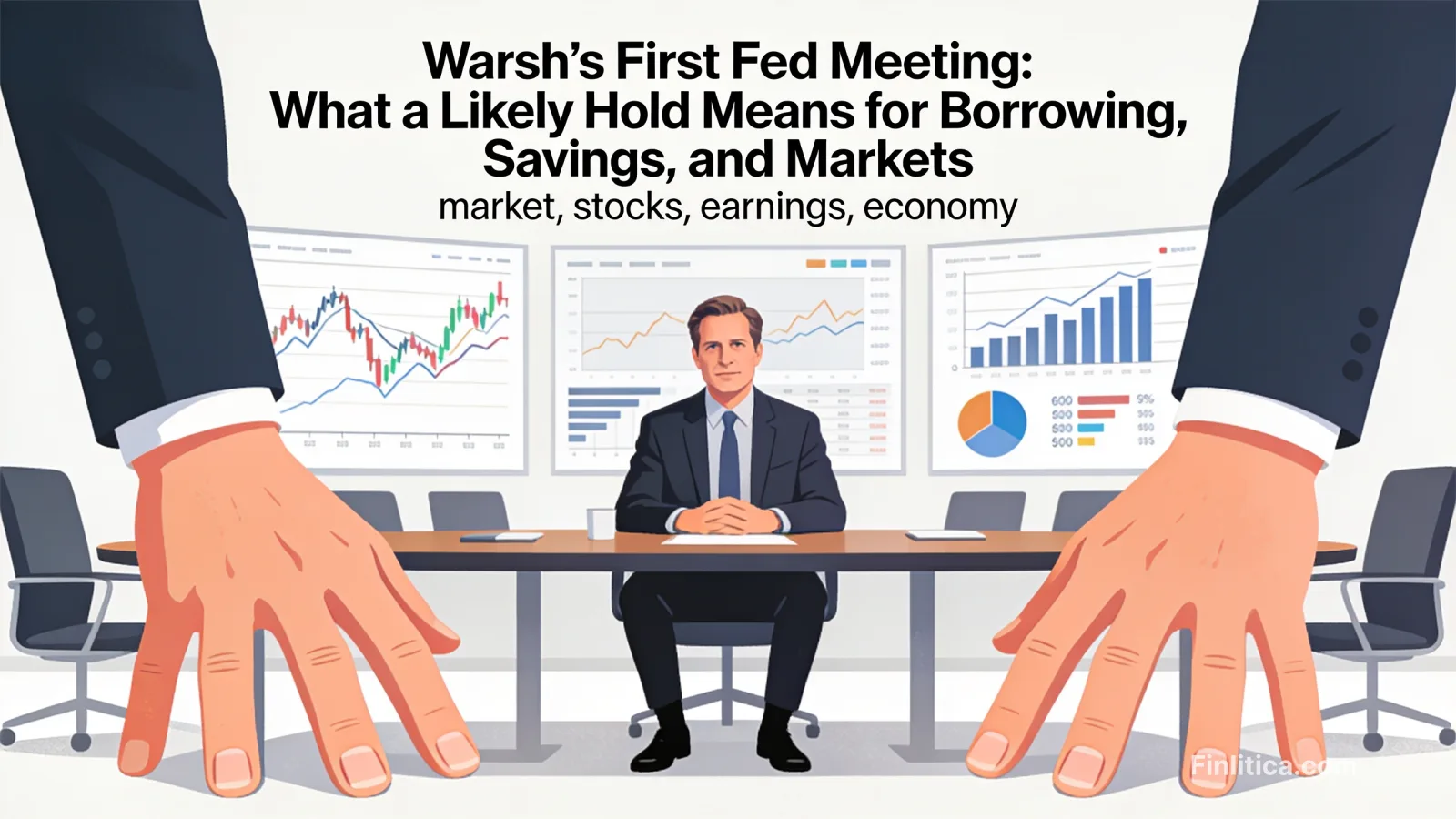
Warsh’s First Fed Meeting: What a Likely Hold Means for Borrowing, Savings, and Markets
With Kevin Warsh chairing his first Federal Reserve meeting, investors expect policy rates to remain unchanged. Here’s how a steady stance could affect loans, savings yields, stocks, bonds, ETFs, and crypto-and what to watch next.
Kevin Warsh’s first turn at the helm of the Federal Reserve arrives with markets widely expecting no change to the benchmark interest rate. For investors navigating the market, stocks, earnings season, and the broader economy, a steady policy rate would extend the central bank’s wait-and-see approach as inflation cools unevenly and growth moderates. The decision point matters across markets-from credit and mortgages to ETFs and crypto-because the policy path will shape financial conditions heading into the second half of the year.
The central bank’s 2% inflation objective remains the anchor for rate decisions, and officials have signaled they need clearer evidence that price pressures are trending there on a sustained basis. In practice, the Fed typically adjusts policy in 25-basis-point steps, a convention that influences how quickly borrowing costs shift for households and companies. With eight scheduled policy meetings per year, each gathering sets expectations for the next, shaping how investors position across rates, equities, and alternatives.
Key takeaways
- Markets anticipate the Fed will hold the policy rate steady as Chair Kevin Warsh leads his first meeting, emphasizing data dependence.
- A prolonged hold keeps the prime rate broadly aligned with current levels, meaning credit cards and many HELOCs would see little near‑term change.
- Bond yields and equity valuations remain sensitive to incoming inflation and labor data, not just the meeting outcome.
What changed vs prior baseline
- Leadership handoff: A new chair can recalibrate communication style and tolerance for interim volatility, even if the near‑term rate call is unchanged.
- Guidance tone: Markets are focused on how the statement and press briefing balance inflation progress versus growth risks, which could shift expectations for the next 1-2 meetings.
- Runway for data: With eight meetings annually, holding this time effectively extends the window for additional inflation and labor readings before any 25-basis‑point move is considered.
- Balance of risks: Greater emphasis on two‑sided risks-overshooting on tightness versus easing too early-may nudge term premia and curve shape.
Why it matters
Policy rates set the baseline for economy-wide financing costs. A hold would stabilize consumer borrowing rates and deposit yields in the near term, while keeping attention on the trajectory of inflation and earnings. For investors, the path-timing and cadence of future 25-basis‑point moves-matters more than a single meeting, because it drives discount rates, credit spreads, and sector leadership.
Where the numbers matter
- 2% inflation goal: This target defines when the Fed can comfortably pivot; persistent readings above 2% argue for patience, while sustained moves toward 2% open the door to easing.
- 25 basis points: The standard increment for rate changes; it’s the step that typically passes through one‑for‑one to the prime rate, directly impacting many credit card APRs and HELOC costs.
- 8 policy meetings: The Fed sets policy on a roughly six‑to‑eight‑week cycle; each meeting updates the probability path for future moves, which in turn shifts Treasury yields and equity multiples.
Market implications
Equities and sector allocation
- Valuation sensitivity: A steady policy rate supports multiples if inflation progress continues, but earnings quality remains the swing factor for stocks. Rate‑sensitive groups-housing, small caps, and select tech-could benefit more from clearer easing prospects later this year.
- Defensives vs cyclicals: If guidance leans cautious, defensives and cash‑flow‑rich names may hold an edge; a more confident tone on the economy could favor cyclicals and industrials.
Rates and credit
- Yield curve: Holding steady keeps front‑end yields anchored; long‑end moves will hinge on inflation momentum and term premium. That can shift total returns for core bond ETFs and duration bets.
- Credit spreads: A prolonged plateau can support investment‑grade stability, while high yield remains sensitive to growth data and refinancing needs.
ETFs and multi‑asset positioning
- Core bond ETFs: Duration exposure may benefit if disinflation resumes; investors should watch real yields for signals on total return potential.
- Equity factor ETFs: Quality and profitability screens can cushion against rate volatility; small‑cap ETFs gain leverage if policy easing draws closer.
Crypto and alternatives
- Liquidity tone: A steady rate backdrop keeps the macro impulse neutral; crypto tends to track broader risk appetite and dollar dynamics rather than single‑meeting outcomes.
What it means for household finances
- Credit cards and HELOCs: With the prime rate typically moving one‑for‑one with the Fed’s 25-basis‑point steps, a hold likely means no immediate change in revolving rates.
- Mortgages: Fixed mortgage rates are more closely tied to longer‑term Treasury yields; any relief depends on the inflation path rather than this meeting alone.
- Savings and CDs: Deposit rates often lag policy changes; a steady stance may keep top‑tier yields relatively stable, though banks can adjust based on funding needs.
Risks and alternative scenario
- Sticky inflation: If monthly inflation readings stall above the 2% objective, markets could price a longer holding period or even renewed tightening risk.
- Growth slowdown: A sharper‑than‑expected cooling in jobs or spending could bring forward discussions of rate cuts, steepening the yield curve but pressuring cyclicals.
- Communication misread: Shifts in tone under new leadership may be interpreted as more hawkish or dovish than intended, increasing volatility in rates and stocks.
- Global shocks: Energy price spikes or geopolitical events could re‑accelerate inflation or hit demand, complicating the policy path.
What to watch next
- Inflation trend: Successive monthly readings are more important than one print; consistency toward 2% would firm up easing expectations.
- Labor market breadth: Wage growth and participation data will inform whether policy can remain restrictive or pivot.
- Financial conditions: Moves in credit spreads and lending standards will signal how restrictive policy is on the ground.
FAQ
Is a rate hold bullish or bearish for stocks?
Neither by itself. Equities react more to the outlook embedded in the statement, press briefing, and upcoming data. A credible path toward 2% inflation with stable growth tends to support risk assets.
How quickly do Fed moves affect my credit card rate?
When the Fed changes the policy rate by 25 basis points, the prime rate typically adjusts by the same amount, and many variable APRs update within one to two billing cycles. A hold generally means little near‑term change.
Will mortgage rates fall if the Fed holds?
Not necessarily. Fixed mortgage rates follow longer‑term Treasury yields and inflation expectations. Sustained disinflation is more likely to lower mortgage rates than a single meeting outcome.
What is the timeline for any potential cuts?
The Fed meets eight times a year. The timing depends on cumulative evidence that inflation is moving sustainably toward 2% and that the labor market can absorb easier policy without reigniting price pressures.
Sources & Verification
-
View sourceCNBC Top Newswww.cnbc.com