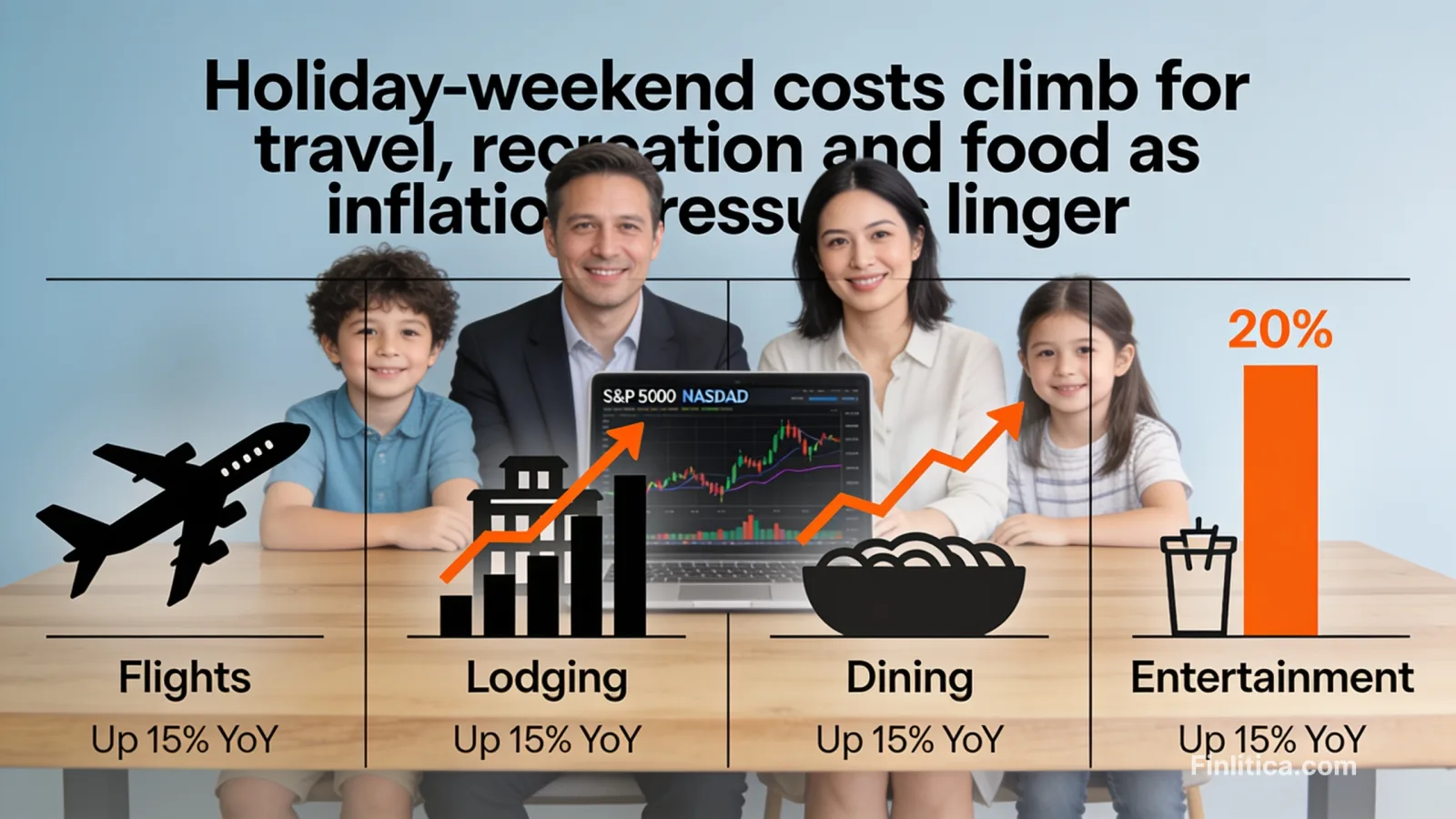
Holiday-weekend costs climb for travel, recreation and food as inflation pressures linger
Prices tied to summer kick-off activities-flights, lodging, dining and entertainment-are running hotter than core goods, underscoring sticky services inflation and its market relevance heading into June.
Americans heading into the long weekend are confronting higher outlays for travel, recreation and food, highlighting how services categories continue to carry much of the current inflation burden. The pattern matters for the economy and markets because services prices tend to adjust slowly, complicating the path for interest rates and influencing risk appetite across stocks, bonds and ETFs.
The latest spending mix reinforces that inflation pressures are concentrated in experiences rather than physical goods. Services account for roughly two-thirds of U.S. consumer spending-a critical share that means even moderate price increases in travel and dining can keep overall inflation elevated. Shelter alone represents about one-third of the Consumer Price Index, and food consumes about 13% of the average household budget, so weekend choices around lodging and meals can meaningfully affect monthly outlays.
Where prices are rising the most
Three clusters stand out for holiday plans: travel (airfare, lodging, rental cars, gasoline), recreation (events, attractions, streaming and live entertainment) and food (groceries and restaurants). Each category has distinct cost drivers-capacity and labor for airlines and hotels, wage and insurance costs for restaurants, and energy and logistics for both grocers and transportation.
- Travel: Seasonal demand tightens capacity for flights and accommodations, nudging fares and nightly rates higher compared with shoulder-season levels.
- Recreation: Strong attendance at events and venues lifts prices for tickets and ancillary services, while insurance and labor costs filter through to consumers.
- Food: Restaurant prices have been more resilient than grocery prices as operators pass along higher labor and occupancy expenses, making dining out notably pricier for holiday gatherings.
What changed vs prior baseline
- Services stickiness: Compared with earlier disinflation led by goods, current price firming is concentrated in services tied to travel, leisure and dining, which historically cool more slowly.
- Labor-cost pass-throughs: Wage and benefit increases in hospitality and food service are more visible at checkout than a year ago, supporting higher menu prices and room rates.
- Insurance and fees: Rising insurance and operating costs for travel and entertainment providers are showing up as surcharges and higher base prices more frequently than last summer.
- Energy sensitivity: Seasonal fuel dynamics are exerting a larger share of total trip costs versus the prior shoulder season, especially for road travel.
Why it matters
Inflation concentrated in services can keep headline measures firm even if goods prices are flat. With services representing about two-thirds of spending and shelter roughly one-third of CPI, persistent price strength in travel and dining risks delaying rate relief. That, in turn, shapes equity sector leadership, bond duration preferences and ETF flows as investors recalibrate for a stickier inflation path.
Market implications
Equities
- Consumer-facing stocks: Restaurants, hotels and entertainment operators may see revenue resilience from robust demand but face margin pressure if wage, insurance and utility costs outpace pricing power. Investors should differentiate between brands with strong pricing power and those reliant on discounting.
- Transportation and travel platforms: Airlines and booking platforms can benefit from high load factors and room demand, but fuel and labor costs remain swing variables for earnings quality. Capacity management will be a key driver for quarterly results.
Fixed income and credit
- Rates market: Sticky services inflation can keep policy rates elevated for longer, supporting higher front-end yields and a flatter curve relative to a rapid-cut scenario. Duration risk remains sensitive to upside surprises.
- Corporate credit: Leisure and hospitality issuers with variable cost structures may experience near-term revenue support, but rising operating expenses could pressure coverage ratios. Credit selection should focus on balance-sheet flexibility and pricing power.
ETFs and asset allocation
- Sector ETFs: Consumer discretionary funds with heavy exposure to travel and dining may benefit from demand strength, while staples-focused ETFs could see steadier performance as households rebalance budgets.
- Inflation-sensitive strategies: Funds tilted to value, cash-like instruments or short-duration bonds can offer relative resilience if services inflation extends the higher-for-longer rate environment.
Three numbers to watch
- About two-thirds: Services comprise roughly two-thirds of total consumer spending, so modest price increases in travel and recreation can keep aggregate inflation firm. This share amplifies the macro effect of holiday demand.
- One-third: Shelter accounts for about one-third of CPI, making lodging dynamics and broader housing-related services pivotal for the inflation trajectory that the rates market prices.
- 13%: Food takes roughly 13% of the average household budget, meaning higher restaurant tabs and cookout costs materially influence discretionary spending for the month.
Risks and alternative scenario
- Demand fade: If post-holiday spending softens more than expected, providers may discount unsold capacity, easing price pressures faster than seasonal norms.
- Energy volatility: A swift downswing in fuel prices would relieve transportation and logistics costs, while a spike would do the opposite, altering near-term inflation prints.
- Productivity gains: Efficiency improvements in travel and food service-such as automation or optimized staffing-could cap price increases even amid firm demand.
- Policy sensitivity: Faster-than-expected disinflation in services could reopen the door to rate cuts, while upside surprises would extend restrictive policy and weigh on rate-sensitive assets.
Consumer takeaways
- Book early and compare: Airfare and lodging are more sensitive to capacity around peak weekends; flexible dates and alternative airports can meaningfully trim costs.
- Mix dining choices: Combining groceries with select restaurant meals can balance quality-of-life with budget discipline when menu prices are elevated.
- Watch fees: Travel and entertainment surcharges vary widely; checking total price before committing helps avoid unexpected costs.
FAQ
Which categories are driving current holiday price pressure?
Travel, recreation and food are showing the most visible increases, reflecting tight capacity, higher labor and insurance costs, and seasonal demand.
How does this affect the inflation outlook?
Because services represent a large share of spending, firm prices in travel and dining can keep inflation measures elevated even if goods prices are stable, influencing expectations for interest rates.
What does this mean for investors?
Sticky services inflation typically favors quality balance sheets, pricing power and shorter-duration fixed income. Sector rotation within consumer discretionary and selective exposure in travel-related names can help manage risk.
Are these pressures likely to persist after the holiday?
Seasonal demand often remains firm through early summer. The pace at which prices normalize depends on capacity, energy costs and the broader spending environment.
Sources & Verification
-
View sourceCNBC Top Newswww.cnbc.com