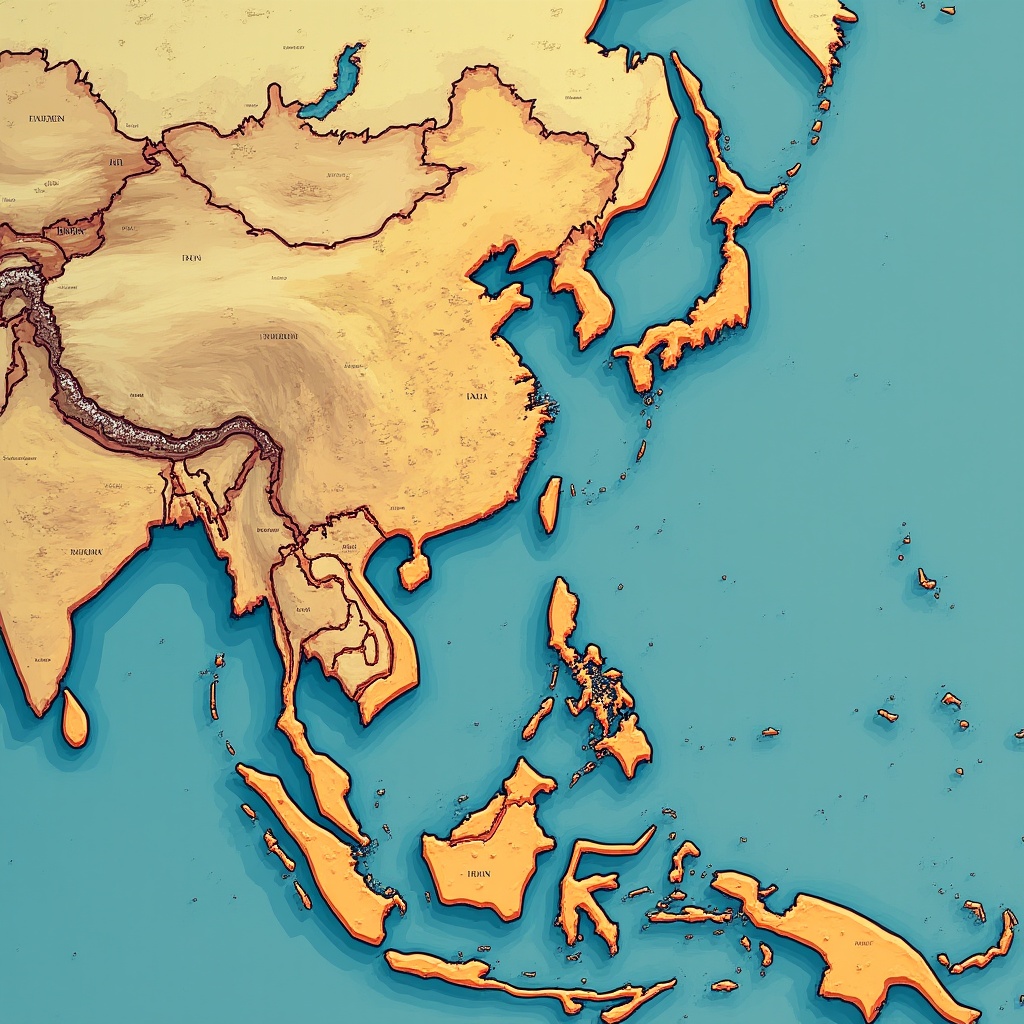
Asia-Pacific stocks slide as Hormuz shutdown threat deepens geopolitical risk
Asian markets fell after Iran’s new Supreme Leader Mojtaba Khamenei said the Strait of Hormuz should remain shut, intensifying energy-supply concerns and heightening uncertainty over a prolonged conflict in the Middle East.
Asia-Pacific stocks declined on Friday as investors reacted to escalating geopolitical tensions and renewed supply risks in energy markets. The pullback followed remarks by Iran’s new Supreme Leader, Mojtaba Khamenei, who said late Thursday that the Strait of Hormuz should remain shut, sharpening concerns that a prolonged war in the Middle East could disrupt oil flows and weigh on markets.
The risk-off tone rippled across major regional benchmarks, with declines seen in Japan, South Korea, Hong Kong, and mainland China. The latest bout of volatility reflects growing unease about how an extended conflict and potential shipping disruptions might affect inflation, central bank rate paths, and corporate earnings across the region.
Market snapshot
Equities across the Asia-Pacific region traded lower in synchronized fashion. Investors trimmed exposure to cyclicals and exporters amid uncertainty over energy costs and supply chains, while defensives drew relatively steadier interest. Trading volumes suggested a cautious stance ahead of key economic data and policy signals later this month.
Benchmarks including Japan’s Nikkei 225, South Korea’s Kospi, Hong Kong’s Hang Seng, and China’s CSI 300 were broadly weaker during the session. Sector moves skewed toward declines in energy-intensive industries, transport, and select consumer names, reflecting concerns that higher input costs could pressure margins if oil prices climb.
Why the Strait of Hormuz matters for markets
The Strait of Hormuz is a critical chokepoint for global crude and refined product shipments. Any sustained disruption there could tighten near-term supply, inject volatility into oil and shipping prices, and feed through to headline inflation. That, in turn, can influence the debate over interest rate settings as policymakers balance growth and price stability.
While the full economic impact depends on the scope and duration of any disruption, investors are reassessing scenarios that could raise costs for energy importers across Asia. Higher fuel prices typically affect transportation, manufacturing, and utilities first, with potential knock-on effects for consumer prices and corporate profitability.
Rates, inflation, and earnings lens
The latest geopolitical developments arrive as markets parse the trajectory for inflation and interest rates in 2026. A sustained rise in energy costs could slow disinflation, complicating expectations for central banks that had been weighing the timing and pace of rate adjustments. For equity investors, that could mean a tighter financial backdrop alongside pressures on input costs.
Corporate guidance and earnings quality will be central to how individual stocks perform through this period. Companies with pricing power, hedging programs, and resilient balance sheets may be better positioned to navigate swings in fuel and freight costs. Conversely, sectors sensitive to energy prices and global trade—such as airlines, logistics, chemicals, and some consumer durables—face a more challenging operating environment if volatility persists.
What to watch next
- Policy updates: Any official signals from regional governments or global institutions regarding shipping security and energy supply routes.
- Energy prices: The magnitude and persistence of moves in crude benchmarks and refined products, and their pass-through to inflation.
- Inflation data: Monthly consumer price reports across major Asia-Pacific economies, which could inform rate expectations.
- Central bank meetings: Guidance from key central banks on the growth-inflation trade-off and balance sheet plans.
- Earnings season: Company commentary on input costs, demand conditions, and supply chain resilience.
Why it matters
- Markets: Geopolitical risk is a key driver of short-term volatility and sector dispersion.
- Economy: Potential energy supply disruptions can influence inflation trajectories and growth.
- Policy: Shifts in inflation expectations may affect the path of interest rates across advanced and emerging Asia.
- Investing: Elevated uncertainty underscores the importance of risk management, diversification, and attention to earnings quality.
Frequently asked questions
What is the Strait of Hormuz and why is it important?
The Strait of Hormuz is a narrow waterway connecting the Persian Gulf with the Gulf of Oman and the Arabian Sea. It is one of the world’s most vital routes for crude oil and refined product shipments. Disruptions there can quickly affect global energy supply, prices, and shipping costs.
How could a closure or restriction affect markets and the economy?
Any limitation on traffic through the strait could tighten oil supply, push up energy prices, and raise transportation and production costs. That may lift headline inflation and complicate interest rate decisions, with knock-on effects for corporate margins and consumer spending.
Which Asia-Pacific indices were under pressure?
Major benchmarks across the region, including Japan’s Nikkei 225, South Korea’s Kospi, Hong Kong’s Hang Seng, and China’s CSI 300, traded lower amid heightened geopolitical uncertainty. Sector breadth skewed negative, particularly among energy-intensive and trade-dependent industries.
What does this mean for inflation and interest rates?
If energy prices rise and remain elevated, inflation could prove stickier than expected. Central banks may need to weigh inflation risks against growth concerns when considering policy rates. The balance will vary by economy depending on energy dependence and domestic demand conditions.
How should investors approach the current environment?
Periods of heightened geopolitical risk often bring wider price swings. Investors commonly focus on diversification, balance sheet strength, cash flow resilience, and the credibility of corporate guidance. Maintaining a long-term framework while monitoring risks to earnings and valuation assumptions is a typical approach.
The bottom line
Asia-Pacific markets retreated as remarks from Iran’s new Supreme Leader about keeping the Strait of Hormuz shut intensified worries over energy supply and a prolonged Middle East conflict. With inflation and rate expectations in flux, investors are watching policy signals, energy markets, and earnings commentary for clarity on the path ahead.
Sources & Verification
-
View sourceCNBC Top Newswww.cnbc.com