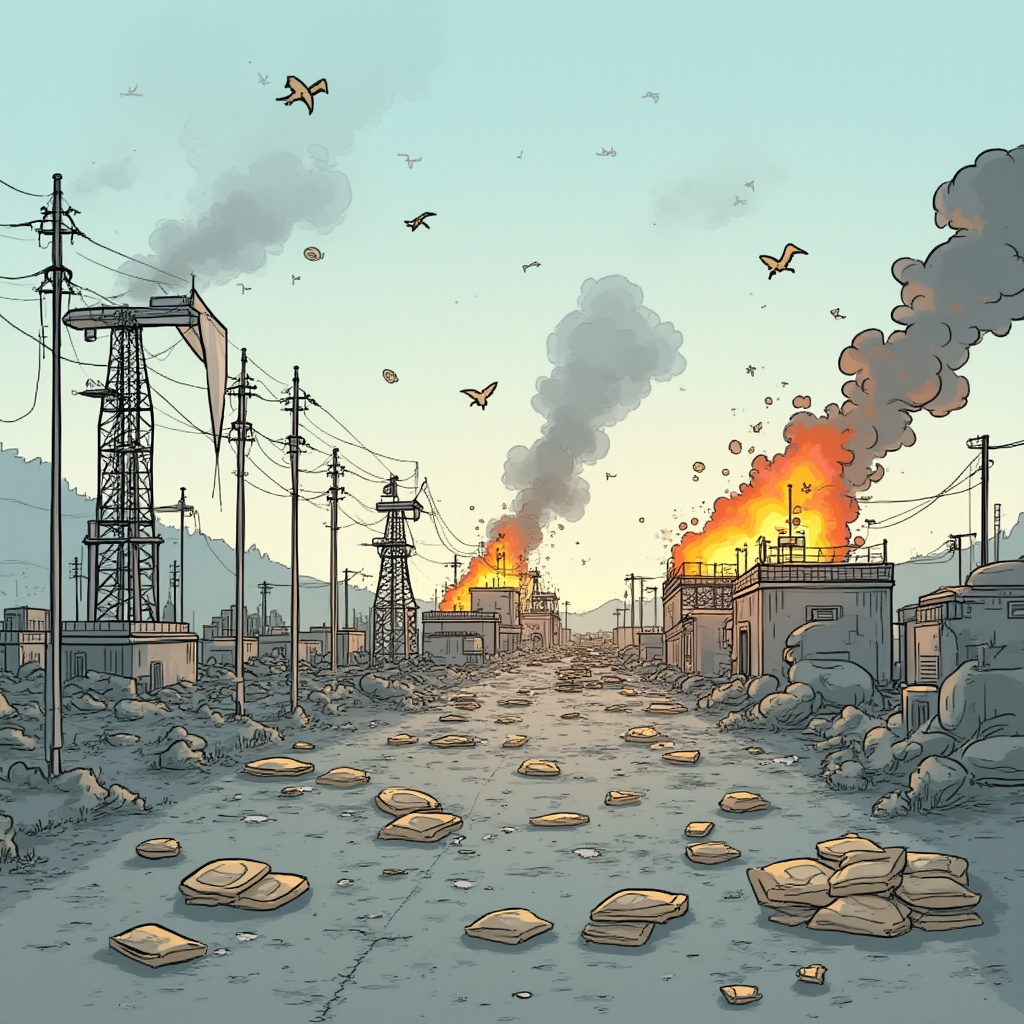
IEA to Release Record 400 Million Barrels From Emergency Reserves as Hormuz Disruptions Intensify
The International Energy Agency approved a record drawdown of 400 million barrels from member countries’ emergency oil reserves to counter supply disruptions linked to the Iran war and reduced flows through the Strait of Hormuz.
The International Energy Agency approved the largest coordinated release of emergency oil reserves on record, authorizing 400 million barrels to help stabilize supply as the Iran war disrupts shipments through the Strait of Hormuz. The decision is designed to cushion global markets against curtailed flows from one of the world’s most critical oil chokepoints and to limit knock-on effects to prices and inflation across major economies. The move will be closely watched by markets for its impact on energy costs, risk sentiment, and broader financial conditions.
With a mounting supply threat from restricted traffic in the Gulf, the IEA’s action aims to ensure oil remains available to refiners and end-users, reduce volatility, and support energy security for its member countries. While coordinated drawdowns cannot fully offset a prolonged disruption, the scale announced marks an effort to bridge immediate gaps and provide time for logistics to adjust.
What the IEA Announced
The IEA, which coordinates energy policy among major consuming nations, agreed to release 400 million barrels from strategic reserves held by member states. The release is framed as an emergency measure to address a supply shock centered on the Strait of Hormuz, a corridor that normally handles a significant share of global crude and condensate flows.
Key points include:
- Record volume: The 400 million barrels surpass prior coordinated drawdowns.
- Purpose: Mitigate supply shortfalls tied to the Iran war and shipping disruptions in the Gulf.
- Mechanism: Member countries deploy oil from strategic petroleum reserves (SPRs) to the market through sales or exchanges.
Details such as the pace of release, country-level contributions, and product mix typically depend on national stock composition and immediate refinery needs. The IEA historically calibrates drawdowns to evolving market conditions.
Why It Matters
The Strait of Hormuz is a central artery for global petroleum trade. A sustained slowdown or blockage can strain supply chains, lift price volatility, and amplify inflation pressures. For policymakers, elevated energy costs can complicate growth and rate decisions; for investors, they can reshape sector performance and asset allocation.
- Energy security: Strategic stocks provide a short-term buffer against physical constraints.
- Inflation dynamics: Lower volatility and added supply can help temper headline inflation, though effects depend on the duration of disruptions and refinery margins.
- Financial conditions: Energy prices influence markets, corporate costs, and household spending.
Context and Comparisons
Coordinated IEA stock releases are rare and reserved for significant supply shocks. Previous actions occurred during major disruptions, including Middle East and North Africa turmoil and the 2022 response to the Russia-Ukraine conflict. Those drawdowns helped bridge temporary gaps and moderate extreme price swings.
The current release addresses constraints associated with the Iran war’s impact on shipping through the Gulf, reinforcing member countries’ capacity to respond collectively when physical supply is at risk.
Potential Market Implications
The additional oil is intended to ease immediate tightness, support refinery runs where feasible, and reduce the likelihood of sustained price spikes. The net impact on benchmark prices will depend on the severity and duration of shipping disruptions, the responsiveness of non-IEA supply, and demand conditions in major consuming regions.
For investors:
- Stocks and sectors: Energy producers and refiners may see performance diverge based on input costs, crack spreads, and hedging. Energy-intensive industries could gain relief if feedstock prices stabilize.
- ETFs: Broad market and sector-specific ETFs may reflect changing expectations for earnings and cash flows tied to energy costs.
- Rates and inflation: If the release curbs energy-price volatility, it could modestly influence inflation prints; policy rate expectations will still hinge on broader data.
- Currencies and commodities: Energy-sensitive currencies and commodity baskets may adjust to revised supply-demand assumptions.
How the Release Works
Strategic petroleum reserves are government-controlled stocks designed for emergencies. When activated, member countries typically deploy barrels through competitive sales, swaps, or loans to the market. Logistics, quality grades, and refinery configurations shape how quickly barrels convert into finished products such as gasoline, diesel, and jet fuel.
Key operational considerations:
- Grade and location: The type of crude and its storage sites affect delivery timelines and refining yields.
- Refinery maintenance cycles: Seasonal turnarounds can influence how rapidly added crude translates into product supply.
- Shipping and insurance: Availability of tankers and risk premiums influence flow rates and costs.
What to Watch Next
Market participants will track the release cadence, bidding outcomes for SPR tenders, and refining runs in key hubs. Shipping data through the Gulf, changes in freight rates, and insurance costs will provide visibility into the physical bottlenecks the release aims to offset.
Data points to monitor include:
- Inventory levels across major hubs.
- Refined product spreads and crack margins.
- Headline and core inflation readings tied to energy components.
- Corporate guidance on energy costs in upcoming earnings updates.
Broader Economic Considerations
Energy prices filter through the economy via transportation, manufacturing, and household bills. A successful stabilization could support consumer spending and reduce cost pressures for businesses. Conversely, if disruptions persist, strategic stocks may primarily buy time while the market rebalances through demand adjustments and supply rerouting.
For long-term planning, companies and investors may reassess exposure to supply-chain risks concentrated in maritime chokepoints and consider diversification of routes, inventories, and hedging strategies.
FAQ
What is the IEA and why does it hold emergency reserves?
The International Energy Agency coordinates energy policy among member countries and oversees emergency oil stockholding requirements. Strategic reserves are maintained to mitigate severe supply disruptions and enhance energy security.
How large is a 400 million-barrel release?
It is the largest coordinated IEA release to date. For context, global oil consumption averages roughly 100 million barrels per day, making the authorized drawdown equivalent to multiple days of worldwide demand.
Will this lower gasoline and diesel prices?
Releases can help ease supply tightness and reduce volatility, but retail fuel prices also depend on refining capacity, regional product inventories, taxes, and distribution costs. Effects vary by market and over time.
How quickly can barrels reach the market?
Timelines depend on the location and grade of stored crude, pipeline and shipping availability, and refinery readiness. Some barrels can move relatively quickly, while others require more time to be processed and delivered as finished products.
What is the Strait of Hormuz and why is it critical?
It is a narrow passage at the mouth of the Persian Gulf through which a significant portion of global oil exports typically transit. Disruptions there can materially affect global supply chains and price stability.
Could this affect central bank rate decisions?
Energy prices influence headline inflation, a factor in monetary policy. However, central banks assess a wide set of indicators, including core inflation and growth data, before adjusting rates.
Sources & Verification
-
View sourceCNBC Top Newswww.cnbc.com