Budgeting Framework: 50/30/20 in Practice
A practical guide to the 50/30/20 budgeting framework-how it works, when to adjust it, and what it means for saving, debt repayment, and day-to-day spending. Learn the updated context, market implications, key risks, and answers to common questions.

Budgeting helps you direct every dollar with purpose, and the 50/30/20 framework remains one of the clearest starting points. This article explains how to put the rule to work, when to adapt it to your situation, and why it matters now. You will learn practical steps to track cash flow, build saving habits, and decide trade-offs without guesswork.
How the 50/30/20 rule works
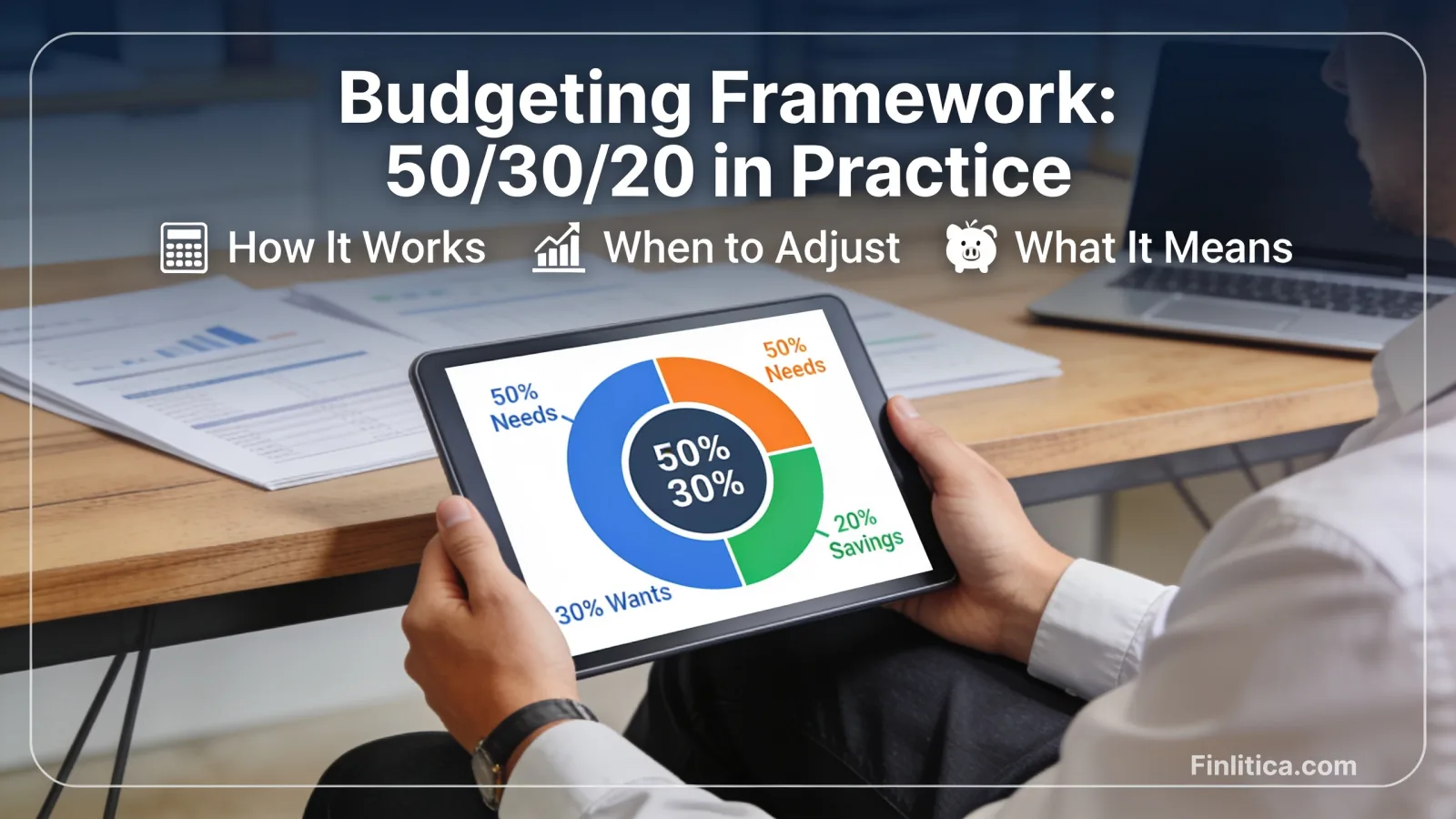
The 50/30/20 rule divides your after-tax income into three buckets: 50% for needs, 30% for wants, and 20% for savings and debt repayment. It creates a baseline you can measure against each month, so your spending aligns with your priorities.
What counts in each bucket
- Needs (50%): Housing, utilities, groceries, insurance premiums, minimum debt payments, transportation to work.
- Wants (30%): Dining out, entertainment, travel, upgrades, and non-essential subscriptions.
- Savings and debt (20%): Emergency fund contributions, retirement accounts, extra debt payments, and sinking funds for future large expenses.
Putting it into practice
Start by listing your fixed bills and recent variable expenses to estimate your true monthly baseline. Automate transfers on payday-send contributions to savings and debt first, then spend what remains. Review once a month to catch creep in wants and re-balance.
Simple numeric checkpoints
- 50/30/20 split: On a $4,000 after-tax month, that is $2,000 to needs, $1,200 to wants, and $800 to savings/debt. This shows whether your current costs fit the framework.
- Emergency fund size: Aim for 3-6 months of essential expenses. If needs total $2,000 per month, the target range is $6,000-$12,000. This buffer reduces the risk of high-interest borrowing after a setback.
- Debt payoff boost: Directing an extra 1%-5% of income toward principal can meaningfully shorten payoff timelines. Even 1% of $4,000 ($40) compounds progress when automated.
Adjusting the rule to your situation
The 50/30/20 rule is a guideline, not a rigid law. If rent or childcare pushes needs above 50%, temporarily reduce wants to keep savings on track. If you carry high-interest debt, consider shifting to a 50/20/30 structure-prioritizing 30% to savings/debt until balances fall.
Irregular income approach
- Use a baseline budget built on your average of the last 6-12 months of income.
- Fund a 1-2 month “income buffer” account before expanding wants.
- Apply a percentage system on each payday to keep contributions consistent.
Why it matters
A clear budgeting structure reduces decision fatigue and improves follow-through. It turns big goals-like an emergency fund or debt freedom-into monthly, trackable actions. Over time, consistent saving and measured spending support resilience when costs rise or income fluctuates.
What changed vs prior baseline
- Higher yields on cash: Savings accounts now often pay more than in past low-rate periods, making cash reserves relatively more rewarding and encouraging larger emergency funds.
- Subscription creep: More recurring services shift wants from one-offs to fixed-style costs, requiring tighter tracking to avoid crowding out savings.
- Variable earnings: Growth of gig and hybrid work increases income volatility, making percentage-based and buffer-first budgeting more practical.
- Automation tools: Broader access to automatic transfers and round-ups lowers friction for saving and debt payments.
Market implications
- Household savers and long-term investors: Larger cash cushions and automated contributions can smooth investment flows, favoring steady, rules-based allocations rather than sporadic lump-sum behavior.
- Debt-burdened consumers: Redirecting 20% (or more) to repayment can decrease revolving balances over time, potentially improving credit profiles and reducing interest costs, which may shift spending away from discretionary categories.
- Young and first-time investors: Percentage-based saving supports earlier, smaller, but consistent investing habits, which can compound over longer horizons and reduce timing risk.
Risks and alternative scenario
- Inflation pressure: Rising prices can push needs above 50%, forcing trade-offs that, if ignored, erode savings rates.
- Income shocks: Job loss or reduced hours can break automation plans unless an income buffer exists.
- Behavioral drift: Small upgrades and subscription accumulation can gradually convert wants into pseudo-needs, squeezing the savings share.
- Interest-rate shifts: Falling cash yields reduce the benefit of large cash balances; rising rates increase the cost of variable-rate debt, demanding faster payoff emphasis.
Tracking and course-correction
Review your categories monthly and your targets quarterly. Look for two things: whether needs remain under 50%, and whether savings/debt contributions consistently reach at least 20%. If you miss a target, adjust the next month’s plan instead of chasing perfection.
Quick levers to pull
- Cap variable wants (dining, entertainment) with a weekly allowance envelope.
- Renegotiate or shop fixed costs like insurance at renewal to lower needs.
- Automate a small mid-month top-up to savings to offset overspending.
FAQ
Is the 50/30/20 rule after-tax or before-tax?
It is based on after-tax income. If you save in pre-tax retirement accounts, include those contributions within the 20% bucket for a true apples-to-apples view.
What if my rent alone exceeds 30% of take-home pay?
That happens in high-cost areas. Prioritize covering needs, trim wants aggressively, and aim to keep combined needs under 50% by adjusting transportation, insurance, or roommate choices where possible.
How do I budget bonuses or windfalls?
Use a simple split: allocate a set percentage to savings/debt first, earmark a portion for future wants, and keep a small amount for immediate enjoyment to maintain motivation.
Should I invest before building an emergency fund?
Build a starter emergency fund first so you are not forced to sell investments at an inconvenient time. After that, continue growing the fund while contributing regularly to long-term accounts.
How often should I change my percentages?
Keep the structure stable month to month, but revisit quarterly or after major life changes such as a move, new debt, or income shift.
About the Author
Focused on long‑term investing principles and portfolio construction.