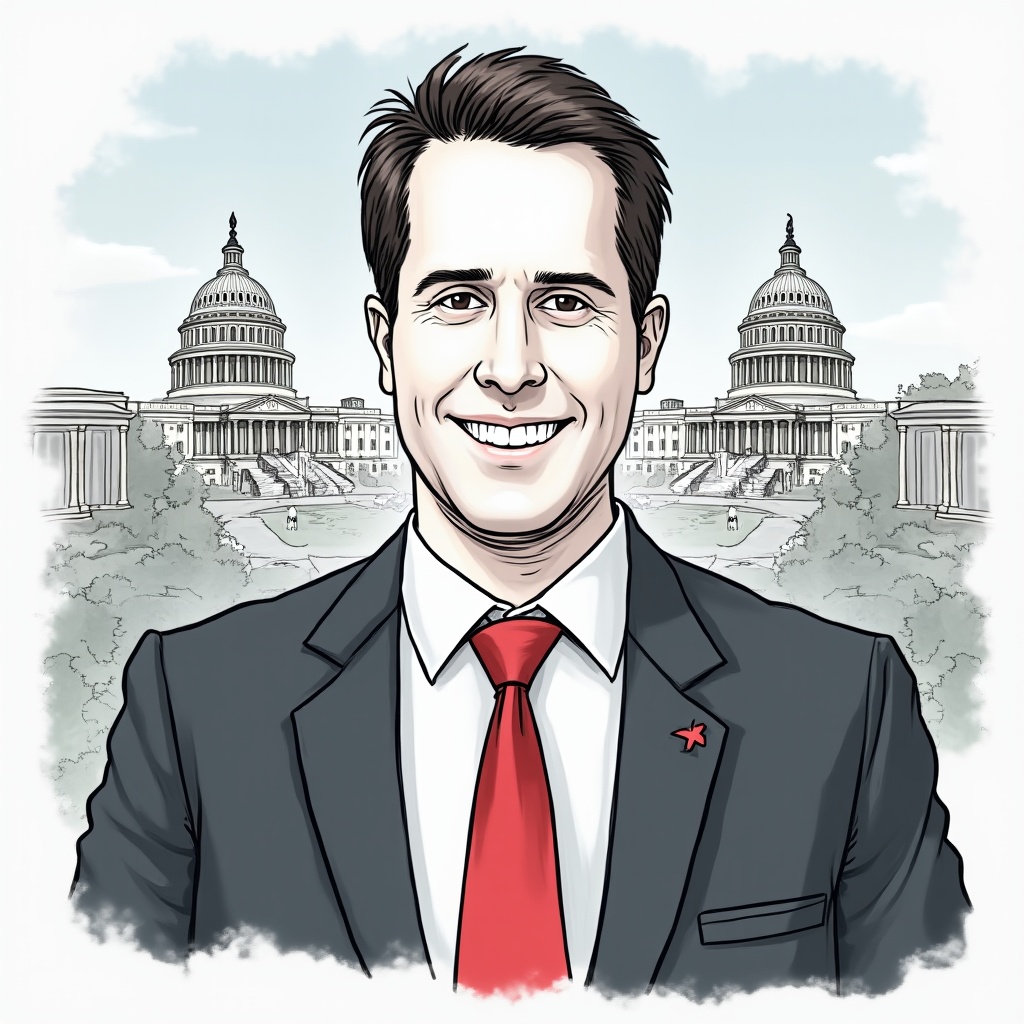
Rep. Seth Moulton Bars Staff From Using Prediction Markets as Washington Scrutiny Intensifies
Rep. Seth Moulton has prohibited his office staff from using prediction markets such as Kalshi and Polymarket, underscoring growing congressional and regulatory focus on event-based wagering platforms that intersect with markets and crypto.
Rep. Seth Moulton has imposed a ban on staff participation in prediction markets, citing the need to avoid conflicts of interest and preserve public trust as activity on platforms like Kalshi and Polymarket draws heightened attention in Washington. The move arrives amid broader efforts to clarify how these markets fit within U.S. financial oversight and their potential influence on markets and crypto-sensitive trading behavior.
The internal policy aims to set a clear boundary for a congressional office that regularly handles market-moving information and public policy. While lawmakers have long grappled with how staff should manage financial exposure, prediction markets present a novel compliance challenge because contracts can be tied to ongoing policy debates and outcomes involving Congress itself.
What changed vs prior baseline
- Explicit office prohibition: Moulton’s directive formally bars staff from trading on event-based platforms, an area not always addressed by standard staff financial policies.
- Alignment with regulator attention: Since 2022, federal derivatives oversight of event contracts has intensified, putting additional focus on whether political and policy-linked markets should be accessible to U.S. users.
- Separation from policy-sensitive events: By restricting staff participation, the office seeks to minimize even the appearance of trading on inside knowledge related to legislative timing or outcomes.
- Signal for broader Hill practices: The action could serve as a template for other offices considering tighter rules on exposure to event-driven instruments.
Context: evolving treatment of event contracts
Prediction markets allow users to trade contracts tied to the likelihood of outcomes—ranging from elections to economic data releases—often settling at $1 if the event occurs and $0 if not. They can provide a crowd-sourced probability snapshot that some investors monitor alongside traditional market indicators.
Regulatory posture has been uneven as agencies assess whether certain event contracts constitute permissible derivatives or unlawful gaming. In 2022, a prominent U.S.-facing platform resolved a federal enforcement action with a $1.4 million civil penalty, a figure that underscored the stakes for compliance and the cost of operating outside clearly defined rules. In parallel, the STOCK Act of 2012 established a decade-old baseline for curbing misuse of nonpublic information by government employees, a framework now being tested by new financial technologies.
Why it matters
- Integrity safeguards: The ban addresses real and perceived conflicts when government staff could trade on outcomes tied to their work.
- Policy clarity: As prediction markets expand, offices are moving to codify whether staff participation is appropriate.
- Market signal: Investor reliance on event markets for probability signals may be affected if U.S. policy restricts participation or growth.
Key numbers
- $1.4 million: The civil monetary penalty paid by a major prediction market platform in 2022 following federal enforcement. The size of the fine highlights how compliance lapses can carry material financial consequences.
- 2012: Passage year of the STOCK Act, which set rules to prevent trading on nonpublic information by government personnel. This provides the ethical and legal backdrop for new staff-level restrictions today.
- 2 named platforms: Kalshi and Polymarket are specifically referenced in the office ban, illustrating that policies are now targeting identifiable venues rather than treating prediction markets as an abstract category.
Market implications
Equities and sector allocation
Equity investors who use prediction markets as a sentiment gauge—especially for policy-sensitive sectors—may face reduced visibility if stricter U.S. participation limits dampen liquidity or narrow contract listings. That could increase reliance on traditional indicators such as options-implied probabilities or survey-based measures when calibrating positions.
Crypto and digital-asset exposure
Some event markets are built on crypto rails, meaning tighter oversight can influence on-chain activity volumes and token-linked transaction flows. Crypto investors and market-makers could see episodic volatility around enforcement headlines or venue access changes, with knock-on effects for stablecoin usage on these platforms.
ETF and systematic strategies
Event-driven and macro ETF strategies that reference external probability inputs may adjust models if prediction market depth or persistence changes. Without robust event-odds feeds, systematic approaches might place greater weight on rate futures, options skews, or earnings dispersion metrics to infer scenarios.
Credit and rates
For credit and rate investors, who often monitor election and policy probabilities, any contraction in event-market signaling could shift focus to Treasury curve pricing, inflation breakevens, and credit default swap levels as primary scenario markers.
Risks and alternative scenario
- Patchwork policies: If offices adopt inconsistent rules, staff behavior and market participation could vary widely across Capitol Hill, complicating compliance expectations and enforcement.
- Legal ambiguity: Ongoing regulatory interpretation of event contracts may lead to rule changes or court outcomes that alter what is permitted, creating uncertainty for platforms and users.
- Chilling effects: Overly broad restrictions could deter benign research use of aggregated probabilities, reducing informational efficiency without meaningfully addressing misconduct risk.
- Workarounds and enforcement: Enforcement relies on disclosure and oversight; without standardized monitoring, individual compliance may be hard to verify.
What this means for investors now
- Reassess inputs: If you incorporate prediction market odds into models, consider redundancy through options, rate-implied paths, or survey data.
- Compliance review: Institutions with public-sector clients should update policies to reflect potential restrictions on event-market exposure.
- Liquidity watch: Monitor venue-specific activity and spreads; thinner order books can reduce the reliability of price signals used for hedging or scenario analysis.
FAQ
What are prediction markets?
They are platforms where users trade contracts based on whether an event will occur, with contract prices reflecting collective estimates of the probability of that outcome.
Are prediction markets legal in the U.S.?
Some event contracts may be permitted under derivatives law, while others can be restricted or treated as unlawful gaming. U.S. regulators have taken enforcement actions and issued decisions that limit certain types of contracts, particularly around political outcomes.
Does Moulton’s ban apply to all congressional staff?
No. It is an internal policy for his office. Other offices set their own rules unless chamber-wide guidance is issued.
Does this affect stock or ETF trading by staff?
The policy addresses prediction markets, not conventional stocks or ETFs. However, existing ethics and disclosure rules still govern all securities trading by covered personnel.
Which platforms are named?
Kalshi and Polymarket are cited as examples, signaling the policy targets prominent venues offering event-based contracts.
Sources & Verification
-
View sourceCNBC Top Newswww.cnbc.com