China Signals Tariff Easing and Wider Farm Market Access After Trump–Xi Meeting
Beijing indicates it may lower select import duties and expand access for foreign farm goods following a Trump–Xi dialogue, a move investors watch for implications on supply chains, inflation, and rates.
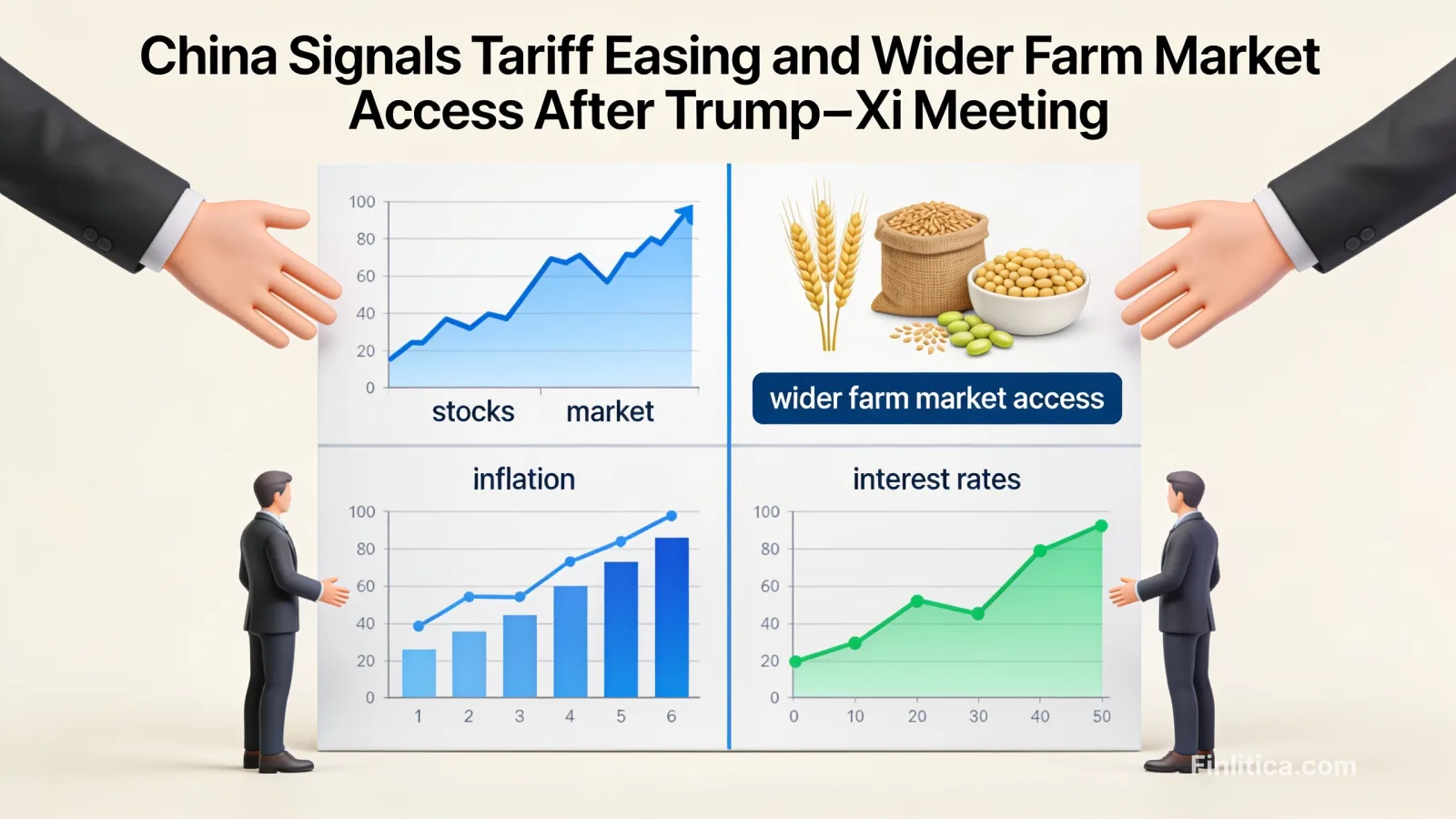
China signaled it could trim certain import tariffs and widen market access for agricultural products following a recent meeting between President Donald Trump and President Xi Jinping. The indication points to a pragmatic effort to stabilize trade ties and reduce friction points that have weighed on global markets and corporate planning. For investors in stocks and broader markets, any credible step to lower trade barriers may influence inflation dynamics, interest-rate expectations, and sector performance.
The prospective changes are incremental and framed as part of a broader recalibration, not a wholesale shift in trade posture. Still, they would matter for companies exposed to cross-border supply chains and for commodity producers looking to restore or grow sales into the world’s second-largest economy. Market participants now look for specific product categories, tariff lines, and timetables that would turn signals into actionable policy.
What changed vs prior baseline
- Clearer direction on tariffs: Beijing has indicated willingness to reduce selected import duties, a departure from the status quo in which many duties were held steady amid lingering trade tensions.
- Farm access as a priority: Authorities highlighted expanded access for agricultural shipments, suggesting quicker approvals and a broader list of eligible products, compared with a prior baseline of gradual, case-by-case openings.
- Confidence-building after leadership talks: The messaging follows a high-level Trump–Xi discussion, adding diplomatic momentum that was absent during periods of heightened tariff escalation.
- Process emphasis: Officials flagged technical and regulatory steps-such as sanitary approvals and customs facilitation-aimed at improving the predictability of farm imports relative to the prior, more fragmented approach.
Context and key numbers
Global investors will recall that U.S. Section 301 measures currently cover roughly $370 billion in Chinese imports at tariff rates of up to 25%. This figure matters because any offsetting tariff relief by China on its side could alter relative price pressures across a wide range of goods, from industrial inputs to consumer products. Even targeted adjustments can shift sourcing decisions and inventory strategies at scale.
China’s average applied most-favored-nation (MFN) tariff stood near 7.5% in recent years, according to international trade data. That number is important as a baseline: marginal cuts from this level can meaningfully change landed costs for importers, especially in price-sensitive categories. If implemented in agricultural lines, the price signal would likely be transmitted quickly through commodity markets and food processors.
Before the escalation of trade frictions, U.S. agricultural exports to China totaled about $19.5 billion in 2017, per official statistics. This magnitude underscores the potential commercial impact of smoother market access: re-opening or expanding lanes for items like grains, meats, and specialty crops can materially affect farm incomes and input suppliers, and by extension, rural credit conditions and equipment demand.
Why it matters
- Inflation and rates: Tariff reductions can ease import costs, potentially lowering goods inflation and indirectly shaping expectations for central bank policy on rates.
- Corporate visibility: Clear rules on farm access and customs processes help companies forecast volumes, manage inventories, and plan capital spending.
- Portfolio positioning: Equity and commodity investors often reprice trade-sensitive sectors swiftly on credible policy signals, influencing near-term market leadership.
Market implications
Equities and sectors
- Agriculture and inputs: Seed, fertilizer, and equipment makers could benefit if expanded access boosts export volumes and farm cash flows. Food processors with China-facing channels may also see improved throughput and mix.
- Consumer and industrials: Select tariff cuts on intermediate goods could reduce cost-of-goods-sold for manufacturers, potentially supporting margins; retailers exposed to imported categories may gain pricing flexibility.
Credit and ETFs
- Credit markets: Lower policy uncertainty can compress spreads for issuers tied to cross-border trade, particularly in agribusiness and logistics, while improved earnings visibility supports deleveraging narratives.
- ETFs and indices: Broad emerging-market and China-focused ETFs may track sentiment around trade normalization; agriculture and commodities funds could respond to anticipated shifts in demand.
Policy and implementation watch
- Scope and product lines: Investors will look for tariff schedules identifying specific HS codes and the magnitude of any duty cuts.
- Regulatory facilitation: Approvals related to sanitary and phytosanitary (SPS) standards, quota allocations, and customs processing times will determine how quickly volumes can move.
- Reciprocity dynamics: Subsequent U.S. actions on existing tariffs and licensing will shape how durable any improvement in two-way flows becomes.
Risks and alternative scenario
- Limited scope: Announced measures could be narrowly targeted, delivering modest economic benefits and disappointing market expectations.
- Execution delays: Even with headline commitments, technical work on SPS protocols, inspections, and labeling can slow actual shipments, muting near-term effects.
- Geopolitical setbacks: Renewed tensions or separate policy disputes could stall or reverse tariff and market-access progress.
- Commodity volatility: If purchase patterns bunch or shift abruptly, agricultural prices may whipsaw, complicating hedging and inventory planning for producers and processors.
What to watch next
- Official tariff schedules and implementation dates spelling out exact rate reductions.
- Lists of newly eligible agricultural products and any expanded quotas.
- Early trade data prints showing changes in volumes and pricing across key categories.
FAQ
Which sectors stand to benefit first?
Agriculture and food processing are first in line if SPS approvals and customs processes are streamlined. Manufacturers reliant on imported intermediates may also see cost relief if duties on specific inputs fall.
How could this affect inflation and interest rates?
Lower import duties generally reduce landed costs and can ease goods inflation at the margin. If the effect is material and persistent, it could influence the trajectory of policy rates, though central banks weigh a broad set of indicators.
Are these changes final?
No. Authorities have signaled intent, but investors should wait for formal notices that specify the tariff lines, rates, and effective dates, as well as the operational details governing farm imports.
What is the backdrop for current tariffs?
U.S. Section 301 tariffs cover roughly $370 billion of Chinese imports at rates up to 25%, and China has its own countermeasures. China’s average applied MFN tariff is around 7.5%, providing a reference point for potential incremental cuts.
What timeline should markets assume?
Diplomatic signals often precede formal implementation by weeks to months. The pace will depend on technical consultations, publication of tariff schedules, and regulatory clearances for agricultural products.
Sources & Verification
-
View sourceInvesting.comwww.investing.com