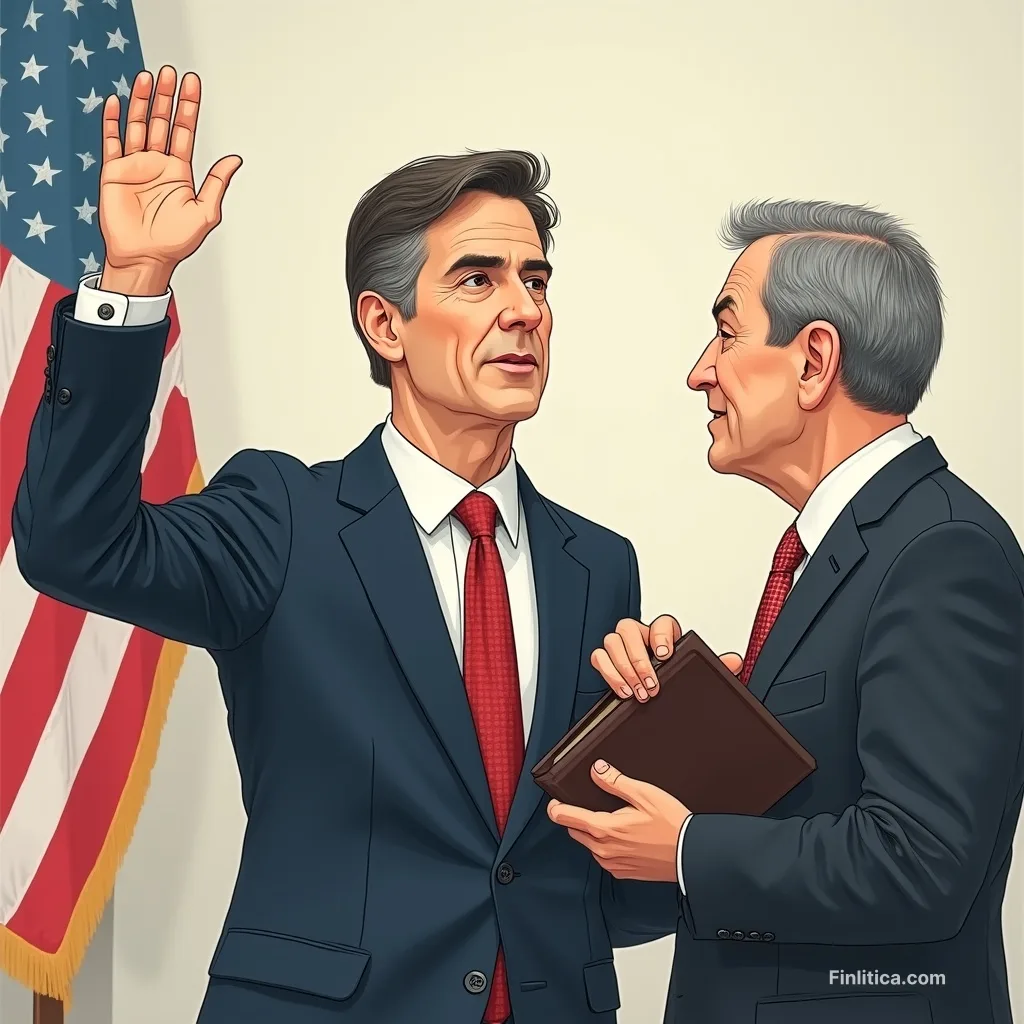
Kevin Warsh sworn in as Federal Reserve Chair; FOMC selects him to lead policy committee
Kevin Warsh took the oath of office as Chair of the Federal Reserve Board of Governors, and the FOMC unanimously chose him as its chair-an early signal of coordinated leadership as markets gauge potential implications for rates, inflation, and monetary policy.
Kevin Warsh has been sworn in as chair of the Federal Reserve Board of Governors, and the Federal Open Market Committee (FOMC) has unanimously selected him as its chair. The dual actions consolidate leadership over U.S. monetary policy at a moment when investors are focused on rates, inflation, and the policy outlook. For banks, markets, and the broader economy, the move clarifies who will set the tone on rate decisions and communications in the coming months.
The selection matters because the Fed chair guides the central bank’s strategy and public messaging, which can influence lending costs, financial conditions, and risk appetite across stocks, bonds, and crypto. The FOMC’s unanimous choice signals alignment among policymakers at the outset of Warsh’s tenure, an important factor for credibility as the committee navigates incoming data and market expectations around interest rates.
What changed vs prior baseline
- Unified leadership: Warsh now leads both the Board of Governors and the FOMC, centralizing policy stewardship and communications across the system.
- Fresh policy voice: A new chair can adjust how guidance is framed-even if the policy path is data-driven-affecting market interpretation of inflation and rate trajectories.
- Process continuity: The unanimous FOMC selection indicates procedural stability, reducing near-term uncertainty around decision-making mechanics and meeting cadence.
- Regulatory emphasis: Leadership changes can influence supervisory priorities at the margin, with potential knock-on effects for bank capital, liquidity, and lending standards.
Key context
The Board of Governors can have up to 7 members, and the FOMC typically has 12 voting members-7 governors plus 5 Reserve Bank presidents. These numbers matter because they define the balance of voices shaping rate decisions and how consensus is built. The committee holds 8 regularly scheduled meetings each year, providing a predictable timetable for policy assessment and market signaling.
The Fed’s long-run inflation goal remains 2 percent, a benchmark that anchors expectations and influences the pace and magnitude of any rate adjustments. With Warsh now chair, the focus shifts to how he frames progress toward that 2 percent objective and the trade-offs between inflation control, employment, and financial stability.
Market implications
- Equities and sector allocation: A steady communication approach could temper volatility in rate-sensitive sectors like housing, utilities, and tech. Investors may scrutinize any shifts in tone on disinflation or growth to recalibrate earnings multiples and risk premia.
- Rates and credit: Treasury yields and credit spreads tend to react first to changes in guidance. Clear alignment between the Board and FOMC can reduce term-premium swings and support orderly functioning in investment-grade, high yield, and municipal markets.
- ETF flows: Rate-sensitive and duration-heavy ETFs may see positioning adjustments around policy meetings. Stability in forward guidance can moderate factor rotations between quality, value, and growth exposures.
- Banks and lending: Supervisory emphasis can affect capital and liquidity choices, shaping loan pricing and availability. That, in turn, influences the transmission of monetary policy into the real economy and corporate refinancing conditions.
Why it matters
Leadership clarity at the Fed is central to how markets price money and risk. The chair’s communication strategy can alter financial conditions even without immediate rate moves, influencing mortgage costs, corporate borrowing, and household sentiment. A unified FOMC chair selection provides an initial signal of policy cohesion as the committee navigates inflation dynamics and employment trends.
What to watch next
- Policy statements and press briefings: Language on inflation progress, labor-market balance, and financial conditions will shape market-implied rate paths.
- Meeting cadence and projections: With 8 scheduled meetings per year, updates to the Summary of Economic Projections and the policy statement will anchor expectations between decisions.
- Supervisory priorities: Any indications on bank capital, liquidity, and stress-testing parameters could influence credit supply and sector performance.
Risks and alternative scenario
- Policy uncertainty: Even with unanimous selection, data surprises on inflation or employment could force recalibrations that unsettle rates and equities.
- Communication misinterpretation: Small wording changes in statements or speeches may trigger outsized market reactions, tightening or loosening financial conditions unintentionally.
- Financial stability tensions: Elevated asset valuations or funding stresses could complicate the balance between price stability and market functioning.
- External shocks: Geopolitical events or supply disruptions may challenge disinflation progress, increasing the difficulty of achieving the 2 percent goal without growth trade-offs.
Frequently asked questions
What exactly changed today?
Kevin Warsh took the oath of office as chair of the Federal Reserve Board of Governors, and the FOMC unanimously selected him as its chair. This consolidates leadership over monetary policy decisions and communications.
How does the Fed chair influence interest rates?
The chair steers the policy discussion, helps build consensus among the 12 voting FOMC members, and communicates the committee’s outlook. This guidance affects market expectations for the policy rate and, by extension, borrowing costs across the economy.
How often does the FOMC meet?
The FOMC holds 8 regularly scheduled meetings a year, with additional meetings as needed. These dates act as key markers for rate decisions and updated guidance.
What is the Fed’s inflation objective?
The Federal Reserve aims for 2 percent inflation over the longer run. This target anchors policy assessment and helps stabilize price expectations among households, firms, and investors.
Does unanimous selection signal the future rate path?
No. While unanimity suggests institutional cohesion, actual rate decisions remain data-dependent and will respond to inflation, employment, and financial stability considerations.
Data points that anchor the outlook
- May 22, 2026: The oath and unanimous FOMC selection on this date set the leadership baseline that will frame near-term policy communications.
- 2 percent inflation goal: This benchmark guides decisions on when to hold, raise, or lower rates and informs how quickly the Fed seeks to return inflation to target.
- 8 scheduled meetings per year: The calendar provides structure for updates to policy and projections, setting expectations for when markets might see changes in guidance.
- 7 governors and 12 voting FOMC members: The composition underscores how consensus is formed and why alignment between the Board and Reserve Bank presidents matters for outcomes.
Sources & Verification
-
View sourceFederal Reservewww.federalreserve.gov