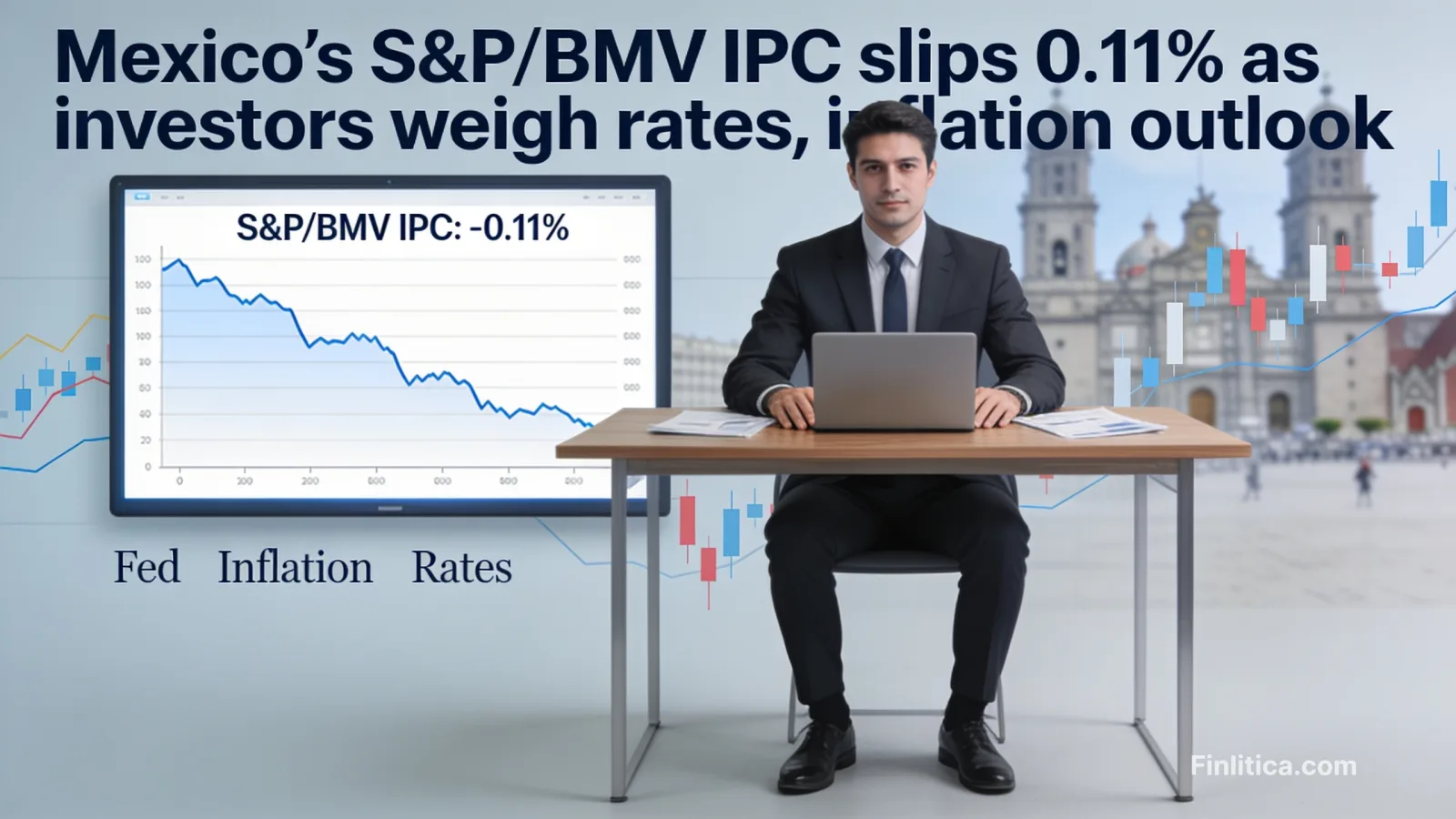
Mexico’s S&P/BMV IPC slips 0.11% as investors weigh rates, inflation outlook
Mexico’s benchmark equity gauge edged lower, with the S&P/BMV IPC down 0.11%, as markets assessed interest-rate and inflation dynamics heading into the next leg of earnings and macro data.
Mexico’s stock market edged lower on the day, with the S&P/BMV IPC declining 0.11%, as investors weighed the path of interest rates and inflation against a steady flow of corporate and economic updates. The modest slip underscores a cautious tone across global markets, where central bank guidance, earnings quality, and currency moves continue to set the pace for risk appetite and investing decisions.
The S&P/BMV IPC is Mexico’s flagship equity benchmark, tracking a curated basket of large and liquid names. With 35 constituents, the index’s composition means sector and single-name swings can meaningfully influence headline performance, especially on lower-volume days. A 0.11% move is small in absolute terms but can flag a wait-and-see stance when markets are parsing signals from the Fed and other policymakers on rates and inflation.
What changed vs prior baseline
- Incremental risk-off tone: The 0.11% decline indicates a marginal pullback after recent sessions characterized by tight ranges, suggesting investors are reluctant to add exposure until the rate and inflation picture becomes clearer.
- Focus on macro catalysts: Attention remains anchored on central bank communication and upcoming inflation readings, which are pivotal for discount rates and earnings multiples across Mexican equities.
- Selective positioning: With the index covering 35 names, recent trading has emphasized stock picking over broad beta exposure, reflecting differentiation in earnings trajectories and balance-sheet resilience.
- Steady liquidity window: The exchange’s roughly 6.5-hour trading session concentrates price discovery, with intraday swings often clustering around macro headlines and opening/closing auctions.
Why it matters
Small index moves can mask meaningful shifts under the surface in sectors tied to domestic demand, export dynamics, and rates. For allocators balancing equity risk with currency and credit exposure, a restrained session helps calibrate position sizes ahead of data that could reset expectations for inflation, policy rates, and earnings revisions.
Market context
The interplay between policy rates and inflation remains central to equity valuation, particularly for financials and rate-sensitive sectors. Global investors are also tracking how U.S. rate expectations and the dollar influence capital flows into emerging markets. While crypto and other high-volatility assets can swing sharply on the same macro cues, Mexico’s benchmark showed a muted reaction, highlighting measured risk-taking.
Historical perspective adds context: the IPC has served as Mexico’s primary market barometer since 1978, offering more than four decades of data across cycles. That longevity, combined with its focused 35-constituent structure, means the index can transmit macro shifts quickly while still reflecting domestic corporate fundamentals.
Market implications
Equity investors
- Valuation sensitivity: Even a 0.11% dip can signal that multiples are meeting resistance as rate and inflation uncertainty persists. Earnings quality and cash-flow durability are likely to remain the drivers of relative performance.
- Sector dispersion: With a compact constituent list, sector moves can outsizedly impact the headline. Investors may emphasize companies with pricing power and conservative leverage until inflation and rate trajectories clarify.
Credit and FX-focused investors
- Funding costs: Rate expectations shape corporate borrowing conditions. A stable-to-cautious equity tape can coincide with wider credit spreads if inflation risks re-emerge.
- Currency overlay: The peso’s path influences equity total returns for offshore investors. Small equity moves, when paired with FX volatility, can materially alter risk-adjusted outcomes and hedging needs.
ETF allocators
- Broad access: Mexico-focused ETFs provide diversified exposure to the IPC basket. In a flat-to-down session, inflows and outflows can amplify tracking differences around the close.
- Rebalance watch: Concentrated benchmarks can see periodic rebalances shift weights meaningfully; allocators may stage entries around such windows to manage slippage.
Key numbers to know
- 0.11%: The session’s decline in the S&P/BMV IPC. Why it matters: A fractional move suggests investors are deferring bigger decisions until there is clearer guidance on rates and inflation.
- 35: The number of constituents in the IPC. Why it matters: A compact index can experience pronounced sector and single-stock effects, heightening the importance of stock selection.
- ~6.5 hours: Typical length of the Mexican equity trading session from open to close. Why it matters: Liquidity and price discovery are concentrated, making timing around macro releases and auction periods critical.
- 1978: The year the IPC was launched. Why it matters: A long performance history provides a robust baseline for assessing cycles and valuation regimes.
Risks and alternative scenario
- Inflation surprises: A hotter-than-expected print could revive concerns about sticky prices, pressuring rate-sensitive shares and compressing equity multiples.
- Policy-rate uncertainty: Shifts in expectations for the Fed or domestic policymakers can raise discount rates, impacting growth valuations and financing conditions.
- FX volatility: A rapid peso move can tighten financial conditions for corporates with foreign-currency exposure and alter foreign investor returns.
- Commodity swings: Sharp changes in oil and industrial commodity prices can ripple through input costs and margins, particularly for exporters and materials-linked names.
- Geopolitical shocks: Trade frictions or supply-chain disruptions could weigh on earnings visibility and cross-border capital flows.
What to watch next
- Upcoming inflation and employment data that could influence rate paths.
- Corporate earnings guidance on margins, pricing, and capex plans.
- Flow dynamics in Mexico-focused ETFs and turnover around index rebalancing events.
FAQ
What is the S&P/BMV IPC?
It is Mexico’s primary equity benchmark, composed of 35 liquid, large-cap companies listed on the Mexican Stock Exchange, designed to reflect the performance of the local market.
Why does a 0.11% move matter?
While small, it signals investor caution and can precede larger moves around key data on inflation, rates, or earnings that affect valuations and risk appetite.
How can investors access Mexican equities?
Investors can buy individual Mexican shares or use diversified vehicles such as Mexico-focused ETFs that track broad market performance.
What factors most influence the IPC day to day?
Macro signals on inflation and interest rates, currency movements, commodity prices, and company-specific earnings updates tend to drive session-to-session performance.
Sources & Verification
-
View sourceInvesting.comwww.investing.com