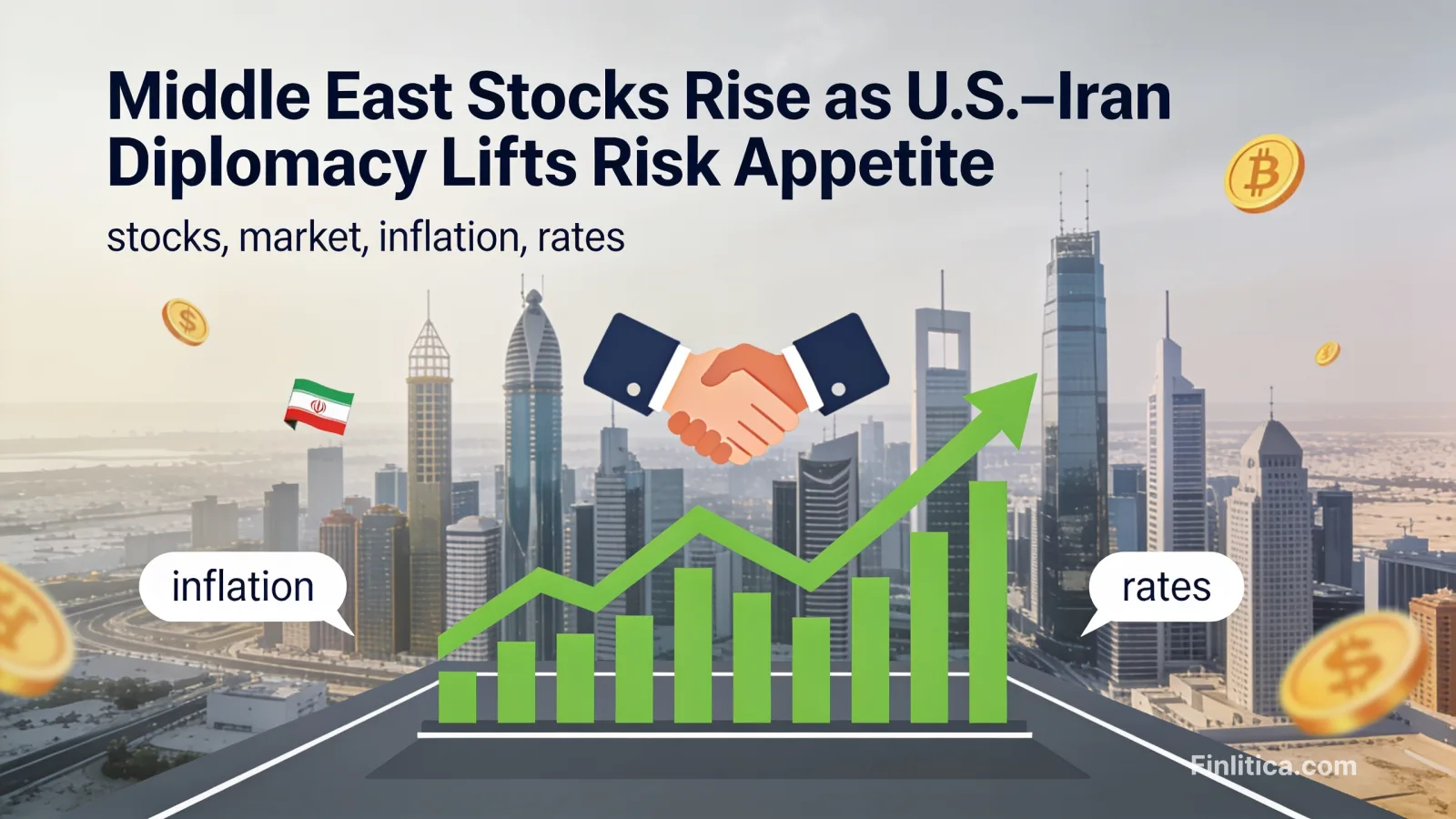
Middle East stocks rise as hopes for U.S.-Iran diplomacy lift risk appetite
Regional equity benchmarks advanced as investors priced a lower geopolitical risk premium on signs of renewed U.S.-Iran engagement. Energy-sensitive markets outperformed while traders assessed implications for oil flows, inflation and rates.

Middle East stocks advanced as investors responded to signs of potential diplomatic progress between the United States and Iran, easing some of the geopolitical risk that has weighed on valuations. With energy at the core of the region’s economy, markets interpreted the latest signals as a possible step toward de-escalation, supporting risk appetite across key Gulf bourses and drawing interest from global investing strategies looking for stability. The move comes as traders continue to monitor the macro backdrop for inflation, interest rates and earnings, making selectivity crucial in a market still sensitive to headline risk.
While details remain limited, the prospect of renewed dialogue reduced near-term event risk tied to energy infrastructure and shipping lanes. That backdrop helped regional stocks outperform broader emerging markets peers during the session, even as global investors kept one eye on central bank policy, including how the Fed’s next moves on rates might influence capital flows into higher-yielding markets.
Why it matters
Geopolitical risk premia directly affect equity multiples, credit spreads and currency stability in energy-exporting economies. A more constructive U.S.-Iran trajectory, even if incremental, can lower volatility, support capital formation, and improve visibility for corporate planning and earnings guidance. For international investors, a steadier Middle East market can diversify portfolio risk at a time when inflation and rate expectations remain fluid.
What changed vs prior baseline
- Shift in perceived risk: Investors priced a lower probability of near-term escalation, improving sentiment toward cyclicals and financials that are sensitive to funding costs and economic activity.
- Energy route stability premium: The market assigned greater confidence to uninterrupted crude flows through the Strait of Hormuz, a key chokepoint, tempering tail-risk hedging.
- Global allocation interest: Renewed attention from emerging-market and frontier funds increased trading activity, with portfolio managers re-evaluating regional weights amid evolving diplomacy.
- Macro read-through: Softer risk premiums can dampen pass-through to inflation from energy shocks, affecting expectations for policy rate paths across importers and exporters.
Market implications
Equities
- Regional stocks: Banking, petrochemicals and transportation names typically benefit first when risk premiums compress and funding markets stabilize. Investors may favor liquid large caps as a lower-volatility way to gain exposure.
- Earnings visibility: If shipping and input-cost uncertainty eases, analysts can refine models, tightening dispersion around earnings estimates and potentially supporting valuation multiples.
Credit and rates
- Sovereign and quasi-sovereign debt: Narrower spreads are plausible as geopolitical premia decline, especially for issuers with strong external buffers. Duration positioning may adjust if market-based inflation expectations cool alongside steadier oil flows.
- Corporate funding: Lower perceived tail risk can reduce new-issue concessions, aiding refinancing timelines and capex plans across industrials and utilities.
ETFs and asset allocation
- ETF flows: Country and regional ETFs may see incremental inflows as asset allocators rebalance toward markets with improving risk-adjusted returns, though flows could remain headline-driven.
- Sector tilts: Energy-adjacent sectors and financials could attract overweight positions, while highly levered small caps may lag if investors prioritize liquidity.
Key context and numbers
- Strait of Hormuz share: Roughly 20% of global petroleum liquids trade passes through the Strait of Hormuz in a typical year. This matters because any reduction in perceived disruption risk can quickly compress energy risk premiums, supporting equity and credit valuations across the region.
- Regional scope: The Gulf Cooperation Council comprises six member states. This number highlights the breadth of potential spillover across interconnected markets when sentiment shifts on regional security and energy logistics.
- Diplomatic timeline: The last comprehensive nuclear accord with Iran was reached in 2015, with the U.S. withdrawal occurring in 2018. These dates anchor the market’s baseline for what a renewed diplomatic track would need to surpass to materially change sanctions dynamics and cross-border investment flows.
Risks and alternative scenario
- Negotiation setbacks: Talks could stall or reverse, quickly restoring higher risk premia and reversing equity gains, particularly in more volatile segments.
- Energy price volatility: Even with diplomacy, exogenous shocks to oil supply or demand could reintroduce inflation pressure, complicating central bank rate paths and tightening financial conditions.
- Sanctions complexity: Partial diplomatic progress may not translate into material sanctions relief, limiting the scope for trade normalization and constraining corporate forecasts.
- Global macro headwinds: A stronger dollar or renewed focus on the Fed’s tightening bias could pull capital away from risk assets, overpowering regional tailwinds.
What to watch next
- Policy signals: Statements from U.S., European and regional officials that clarify diplomatic milestones or timelines.
- Shipping indicators: Insurance premia and tanker traffic metrics in and around the Strait of Hormuz as real-time proxies for risk perception.
- Fund flows: Weekly data on ETF and mutual fund allocations to emerging and frontier markets as a gauge of sustained interest.
- Corporate guidance: Management commentary from banks, logistics, and energy-linked companies on funding costs, demand and capex plans.
FAQ
How does potential U.S.-Iran diplomacy influence Middle East markets?
Lower geopolitical risk can reduce required returns, supporting equity prices and tightening credit spreads. It also lowers the probability of supply disruptions that could stoke inflation and force higher policy rates globally.
Which sectors are most sensitive?
Banks, transport, petrochemicals and insurers often react first as funding costs, trade flows and insurance premia adjust. Defensive sectors may lag if risk appetite broadens.
What does this mean for oil and inflation?
Perceived stability around key shipping lanes can dampen the risk premium embedded in oil prices. That can ease headline inflation pressure, shaping central bank outlooks for rates and influencing cross-asset correlations.
Are ETFs an efficient way to gain exposure?
Broad regional or country-specific ETFs can provide diversified access with daily liquidity. However, headline risk can still drive sharp moves, so position sizing and rebalancing discipline remain important.
Could crypto or non-traditional assets be affected?
If geopolitical risk recedes and rates volatility moderates, broader risk sentiment may improve, which can spill over to higher-beta assets. Correlations are unstable, so investors should avoid assuming persistent relationships.
Sources & Verification
-
View sourceInvesting.comwww.investing.com