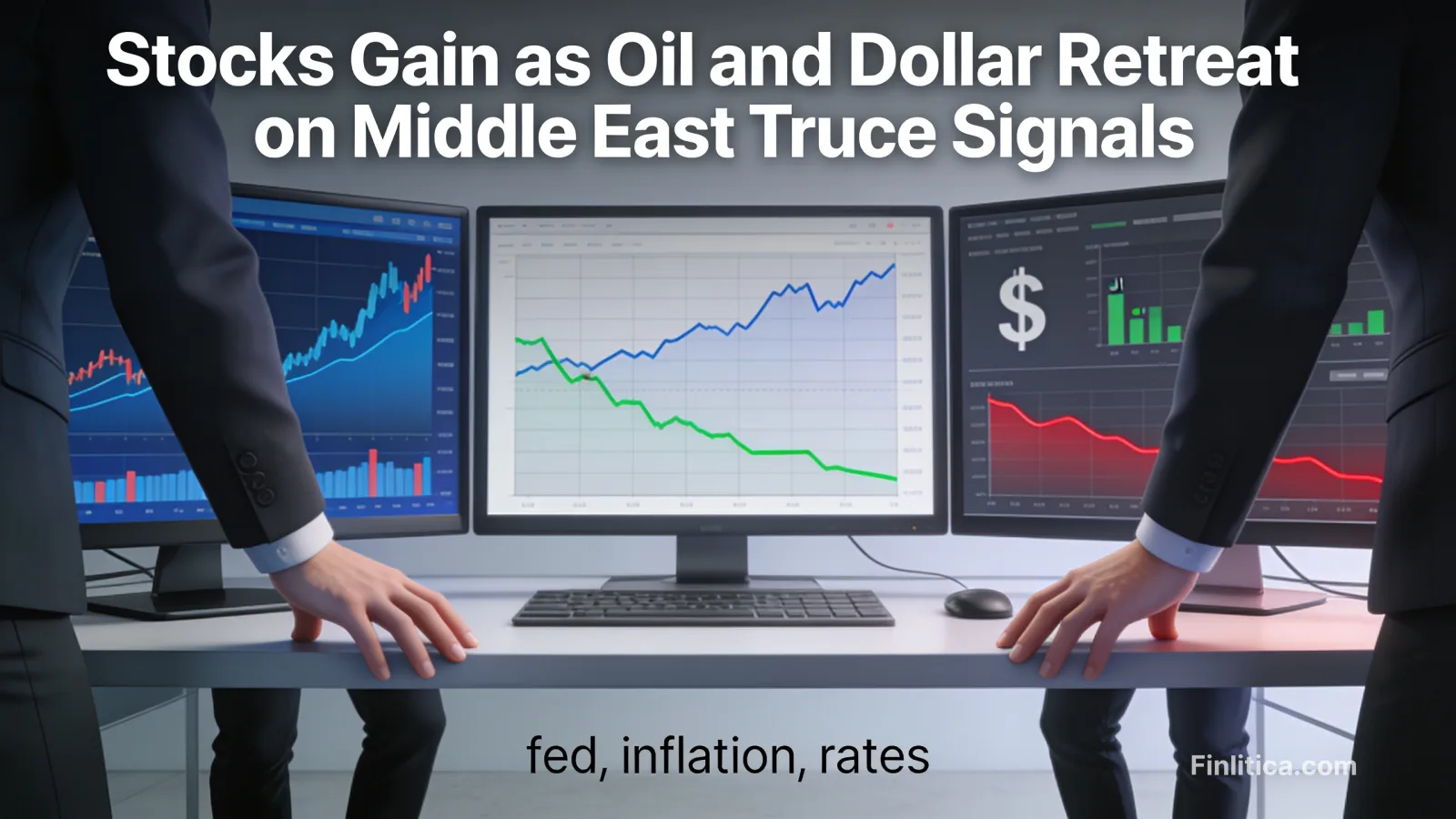
Stocks Gain as Oil and Dollar Retreat on Middle East Truce Signals
Equities advanced while oil and the dollar eased as traders priced a lower geopolitical risk premium. The shift refocuses attention on the Fed, inflation, and rates ahead of a dense data stretch.
Global stocks advanced and risk appetite improved as reports of progress toward a possible ceasefire in the Middle East trimmed the geopolitical risk premium. The pullback in oil and a softer U.S. dollar helped ease near-term inflation concerns, steering market focus back to the Federal Reserve’s rate path and upcoming data. For investors tracking stocks, market breadth improved across cyclical sectors as energy and safe-haven trades lost momentum.
The recalibration in commodity and currency markets comes at a delicate point for the economy, with growth moderating unevenly and earnings expectations stabilizing. A weaker dollar typically supports foreign revenues for U.S. multinationals and commodities priced in dollars, while lower oil prices can temper headline inflation-key inputs for rate-sensitive assets.
Why it matters
Geopolitical risk premiums can inflate energy costs and tighten financial conditions, complicating central bank efforts to curb inflation without stalling growth. A downshift in oil and the dollar offers near-term relief, potentially extending the runway for equities while the Fed gauges progress toward its 2% inflation target.
What changed vs prior baseline
- Lower risk premium in energy: Crude benchmarks eased as ceasefire signals reduced supply-disruption fears, cutting a key tailwind for inflation.
- Softer dollar tone: A weaker greenback eased cross-border financial conditions, particularly for emerging markets and U.S. firms with overseas exposure.
- Rotation under the surface: Cyclicals and small caps saw improving bid as safe-haven and energy trades unwound, suggesting broader participation beyond mega-cap leaders.
- Policy focus re-centered: With immediate geopolitical pressures reduced, markets shifted attention back to inflation dynamics, labor data, and the Fed’s rate trajectory.
Market implications
Equities
- International earners: Roughly 40% of S&P 500 sales come from overseas exposure. A weaker dollar can translate into higher reported revenues, supporting earnings resilience for multinationals.
- Sector skew: Lower oil typically aids transport, consumer discretionary, and some industrials through input-cost relief, while energy producers may lag on narrowing margins.
Credit and rates
- High yield vs. investment grade: Easing inflation pressure and firmer growth sentiment tend to compress credit spreads, with high yield benefiting more than investment grade-though sensitivity to any reversal in oil remains elevated for energy-heavy issuers.
- Rate expectations: With inflation still above the Fed’s 2% target, incremental disinflation from cheaper energy can shape the timing and pace of any policy adjustments, affecting duration exposure across bond portfolios.
ETFs and allocation
- Broad beta: Investors may see renewed inflows to equity ETFs tracking diversified benchmarks if market breadth continues to improve beyond mega-caps.
- Factor tilts: A softer dollar and lower oil can favor quality and small-cap factors over pure momentum, while underweighting energy reduces portfolio volatility tied to commodity swings.
Key numbers to watch
- 2%: The Federal Reserve’s inflation target. Every step closer reduces the need for restrictive policy, supporting rate-sensitive assets like growth stocks and longer-duration bonds.
- ~7%: Approximate energy weight in the U.S. CPI basket. A sustained decline in fuel prices can meaningfully lower headline inflation prints over a few months, influencing rate expectations.
- 40%: Share of S&P 500 revenues derived internationally. Dollar moves can materially impact reported earnings, particularly in technology, healthcare, and industrials.
What investors are watching next
- Inflation data: Headline and core readings will indicate whether lower energy costs are feeding through and how sticky services inflation remains.
- Labor trends: Payrolls and wage growth inform the Fed’s assessment of underlying demand and price pressures.
- Earnings revisions: Guidance on input costs, pricing power, and FX impacts will set the tone for the next leg of the equity move.
Risks and alternative scenario
- Headline risk reversal: If ceasefire progress stalls or tensions re-escalate, oil could rebound quickly, reigniting inflation fears and tightening financial conditions.
- Sticky core inflation: Even with cheaper energy, persistent services inflation could keep policy restrictive longer, pressuring valuations.
- Growth downside: Softer global demand or a profits slowdown could offset the benefit of lower input costs, especially for cyclical sectors.
- FX volatility: A rapid dollar rebound would weigh on commodities and U.S. exporters, reversing some of the week’s supportive market dynamics.
FAQ
How do lower oil prices affect inflation and rates?
Cheaper crude typically reduces headline inflation through lower gasoline and transportation costs. If sustained, it can ease pressure on central banks to keep policy restrictive, affecting rate expectations and bond yields.
Why does a weaker dollar support U.S. equities?
When the dollar falls, overseas revenues translate into more dollars for U.S. multinationals, often supporting reported earnings and margins. It can also lift commodity prices in local-currency terms, aiding global demand.
Which sectors benefit most from falling oil?
Transportation, consumer discretionary, and parts of industrials often see cost relief. Energy producers and services may underperform if crude prices decline meaningfully.
What about crypto?
Risk-on shifts associated with a softer dollar and easier financial conditions can support crypto sentiment, though the asset class remains highly volatile and sensitive to liquidity trends and regulatory developments.
How should ETF investors respond?
Broad-market ETFs can capture improving breadth, while factor ETFs emphasizing quality or small caps may benefit if lower energy costs bolster domestic demand. Reassessing energy weighting can help manage commodity-linked volatility.
Sources & Verification
-
View sourceInvesting.comwww.investing.com