Week Ahead: Markets Focus on Fed Signals, Earnings Resilience, and Fresh Inflation Reads
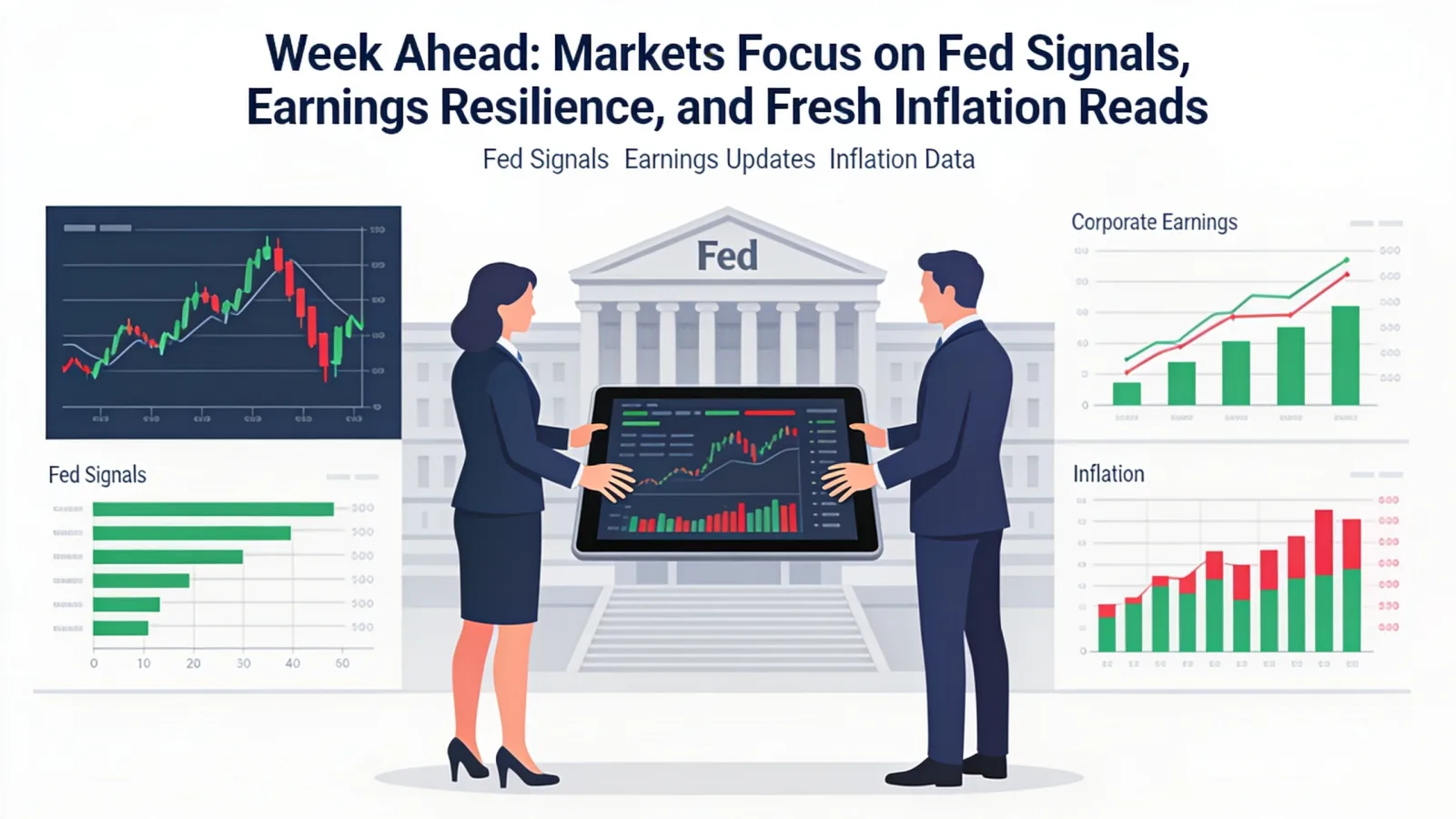
Investors enter the week watching central bank signals, a dense slate of corporate updates, and new inflation data that could sway rate expectations. Positioning across equities, credit, ETFs, and crypto hinges on how these threads resolve.
Stocks start the week with three focal points: how central bank commentary shapes the path for interest rates, whether earnings guidance can validate recent equity strength, and what the next round of inflation and consumer data implies for the economy. The market’s sensitivity to policy direction remains elevated, and Kevin Warsh has emerged as a key name in the ongoing debate over the Federal Reserve’s next steps, keeping rate-path expectations in sharp relief. These elements will steer positioning across equities, credit, ETFs, and crypto as investors weigh near-term catalysts against longer-term fundamentals.
Why now? The combination of policy watchfulness, seasonally heavier corporate newsflow, and closely followed price indicators creates a feedback loop for valuations. With consumer activity comprising a large share of U.S. output and funding costs still central to risk pricing, incremental data could move sectors unevenly and test recent leadership in the market.
What changed vs prior baseline
- Rate sensitivity has intensified: a 25-basis-point move (0.25 percentage point) in policy expectations is increasingly translating into outsized swings in rate-sensitive sectors like housing and small caps, underscoring how tightly valuations are tethered to funding costs.
- Profit dispersion is widening: while headline indexes remain near highs, management teams are guiding more cautiously around input costs and pricing power, raising the importance of company-specific execution versus index-level momentum.
- Policy signaling front and center: with Kevin Warsh a focal point in central bank discussions, markets are recalibrating scenarios for the timing and magnitude of future rate adjustments and balance-sheet strategy.
- Cross-asset linkages are shifting: correlations between equities, credit spreads, and crypto have become more episodic, making diversification benefits less stable around key data drops.
Three things to watch
1) Central bank tone and the rate path
Investors will parse speeches, meeting minutes, and interviews for clues on the inflation trajectory and the tolerance for slower growth. Even modest changes in wording around the labor market or balance-sheet runoff can alter terminal-rate assumptions and yield-curve shape, moving banks, utilities, and growth stocks differently.
- Why the numbers matter: a 25-basis-point shift in the expected policy rate can reprice discounted cash flows for long-duration equities and raise debt service costs for lower-rated issuers.
- Watch the curve: a steeper or flatter 2s/10s spread influences financials’ net interest margins and risk appetite in credit.
2) Earnings quality and forward guidance
Beyond the headline beats and misses, guidance on pricing, wage costs, and inventory is crucial. With consumer spending accounting for roughly 68% of U.S. GDP, commentary from retailers, consumer services, and travel can serve as read-throughs for broader demand conditions. Capital expenditure plans in tech and industrials will also inform productivity and margin narratives.
- Why the numbers matter: updates to revenue growth run-rates-even a 100- to 200-basis-point tweak-can swing valuation multiples for sectors trading at premium price-to-earnings ratios.
- International exposure: about one-third of S&P 500 sales come from overseas, making dollar moves a meaningful tailwind or headwind for reported results.
3) Inflation and spending data
Fresh readings on consumer prices and retail trends will shape near-term rate expectations. The Consumer Price Index tracks roughly 80,000 prices each month, providing a broad view of goods and services inflation, while measures of core inflation guide how persistent pressures might be.
- Why the numbers matter: a 0.1 percentage point surprise in monthly core inflation can materially shift the probability of upcoming rate moves and ripple through bond yields and equity factor performance.
- Goods vs services: signs of stabilization in goods prices alongside sticky services inflation would argue for a slower glide path to target.
Market implications
- Equities: Growth stocks remain sensitive to real yields; a modest backup in rates can compress multiples, particularly in long-duration tech. Conversely, evidence of disinflation or resilient demand could support cyclicals and small caps. Expect higher dispersion across earnings reporters, favoring active selection.
- Credit: Investment-grade issuers may see steady primary activity if rate volatility stays contained, while high-yield spreads are more exposed to guidance-related downgrades or margin pressure. A firmer dollar typically aids USD investors but can pressure EM corporates with FX mismatches.
- ETFs and asset allocation: Broad market ETFs may mask under-the-surface rotation; sector funds tied to financials, homebuilders, and consumer discretionary could see outsized flows around rate and spending signals. Bond ETFs at the front end may attract tactical inflows if policy-path uncertainty rises.
- Crypto and risk sentiment: Crypto assets have traded as high-beta risk proxies at times; tighter financial conditions or stronger real yields can sap momentum, while improving liquidity and disinflation support risk appetite.
Why it matters
These developments influence discount rates, earnings power, and credit availability-the core inputs to asset pricing. Small changes in policy expectations and inflation can reset fair value ranges for stocks and bonds, affecting portfolio construction, hedging, and capital-raising plans.
Risks and alternative scenario
- Stickier inflation: A sequence of upside surprises in core services inflation could delay rate relief and pressure equity multiples, particularly for long-duration sectors.
- Growth slowdown: Softer consumer or labor data may undermine earnings resilience, widen high-yield spreads, and shift leadership toward defensives and quality balance sheets.
- Policy miscommunication: Ambiguous or shifting central bank messaging-especially as attention coalesces around figures like Kevin Warsh-could lift volatility across rates and FX, spilling into equities.
- External shocks: Geopolitical tensions, supply disruptions, or abrupt currency moves can overwhelm domestic data signals and reprice risk quickly.
FAQs
How do small rate changes move stocks?
Equity valuations reflect discounted future cash flows. A 25-basis-point change in the expected policy rate can alter discount rates and sector leadership, with growth stocks typically more sensitive than value or defensives.
Why is consumer data so important?
Household spending accounts for roughly 68% of U.S. GDP, so updates on retail sales, travel, and services demand are strong indicators of revenue momentum and earnings durability.
What should ETF investors watch this week?
Rate-sensitive sector ETFs (financials, homebuilders) and cyclical exposures (consumer discretionary, industrials) may see flow shifts around policy tone and spending data. Bond ETFs on the front end can act as tactical cash-like parking if uncertainty rises.
How do inflation surprises translate into market moves?
Even a 0.1 percentage point deviation in monthly core inflation can change the probability-weighted path of rates, moving Treasury yields, credit spreads, and equity factor performance within hours of release.
Sources & Verification
-
View sourceCNBC Top Newswww.cnbc.com