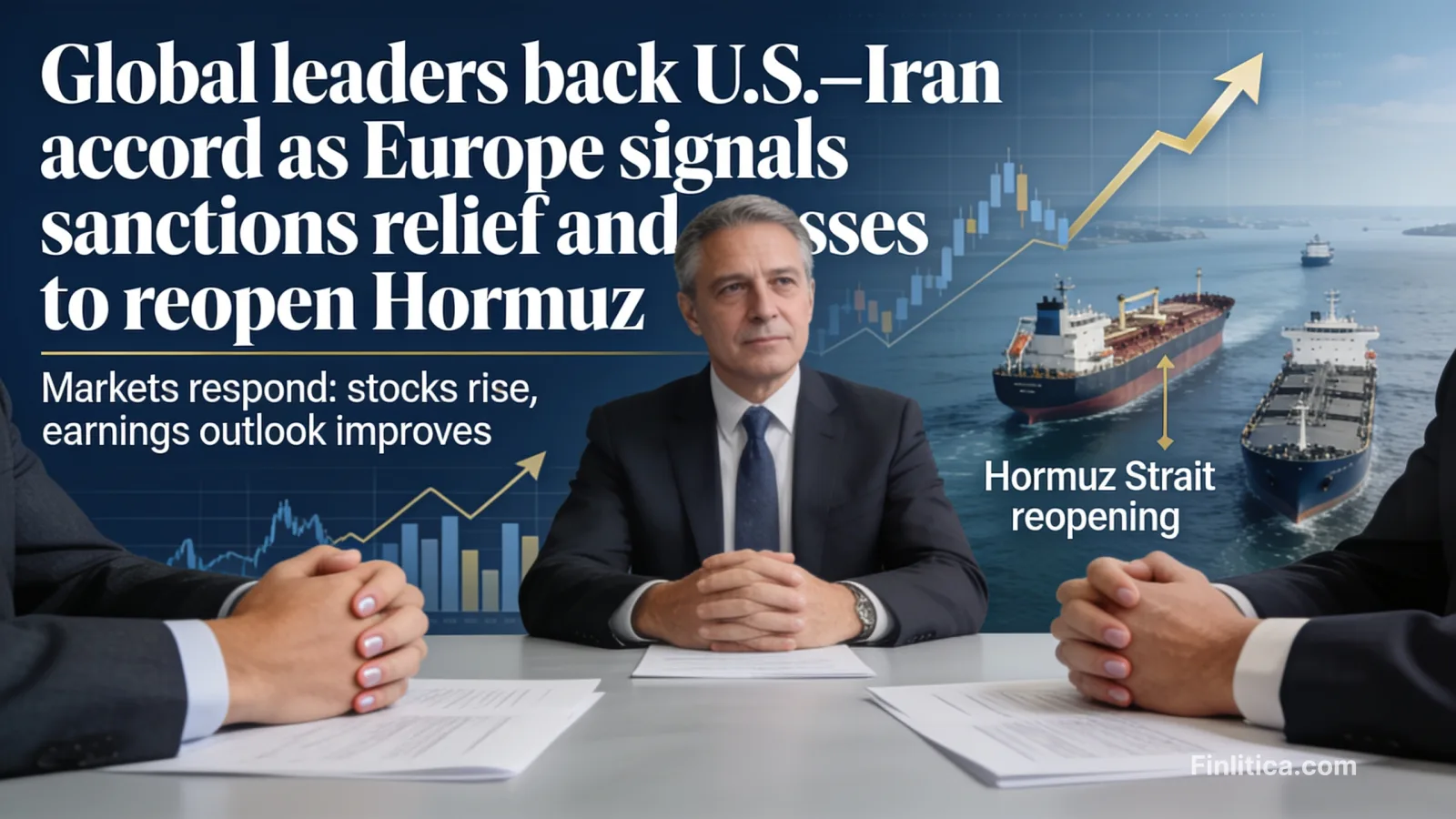
Global leaders back U.S.-Iran accord as Europe signals sanctions relief and presses to reopen Hormuz
A U.S.-Iran agreement drew swift endorsement from allies, with Europe indicating readiness to ease select sanctions and urging a rapid reopening of the Strait of Hormuz. Energy routes that handle roughly 20% of seaborne crude and about 25% of global LNG are in focus, with markets watching for supply normalization after more than three months of disruption.
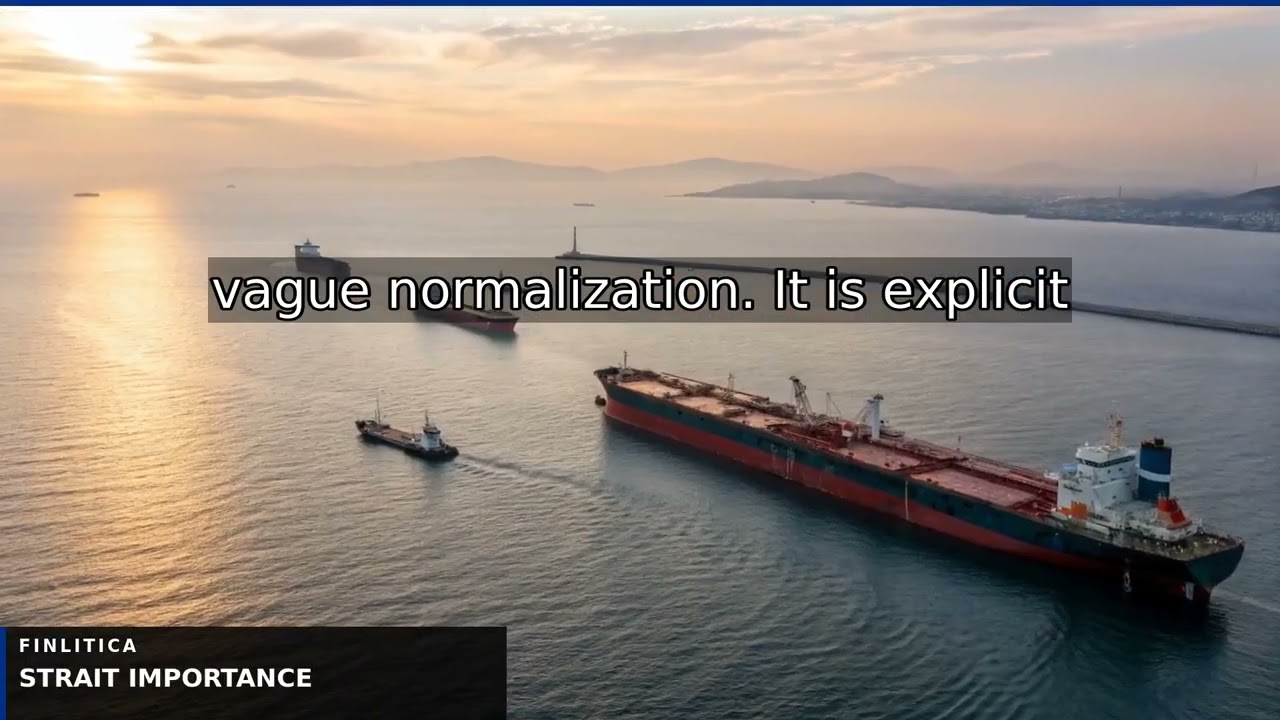
Global leaders welcomed a U.S.-Iran agreement that aims to de-escalate tensions and stabilize key energy corridors, while European officials signaled openness to targeted sanctions relief and called for the rapid reopening of the Strait of Hormuz. The announcement follows more than three months of stop-start negotiations punctuated by fighting since late February, a period that unsettled energy and commodities markets and heightened volatility across risk assets.
Markets are assessing whether the diplomatic breakthrough can unlock shipping lanes and restore predictable crude and gas flows. The Strait of Hormuz, a chokepoint for roughly 20% of the world’s seaborne crude oil and around 25% of global LNG trade, remains central to supply security and inflation dynamics. A durable reopening would ease freight bottlenecks and reduce the geopolitical risk premium embedded in energy prices.
What changed vs prior baseline
- Diplomatic reset: After more than three months of intermittent talks and clashes, the U.S.-Iran accord provides a formal channel for de-escalation, replacing ad-hoc crisis management with a negotiated framework.
- Policy signaling from Europe: European governments indicated readiness to calibrate sanctions relief tied to implementation milestones, a shift from a predominantly punitive stance to conditional engagement.
- Maritime access priority: Reopening the Strait of Hormuz is now a stated near-term objective for multiple stakeholders, elevating shipping normalization from a hopeful outcome to a core policy target.
- Coordinated international support: The breadth of endorsements from major economies increases the probability of follow-through, improving enforcement and monitoring capacity relative to earlier, piecemeal efforts.
Why it matters
Energy logistics through Hormuz underpin price stability for oil and gas, with direct implications for inflation, corporate earnings, and consumer spending power. Reduced shipping risk can lower input costs for manufacturers and transport operators, potentially supporting margins and equity valuations while easing pressure on central banks weighing interest-rate paths.
Market implications
Equities and sectors
- Energy producers: A credible reopening could trim the geopolitical risk premium on crude, pressuring upstream revenues but improving planning visibility. Integrated majors with LNG exposure may benefit from steadier cargo schedules.
- Transport and industrials: Tanker operators, ports, and logistics firms stand to gain from normalized throughput. Energy-intensive manufacturers could see input cost relief if benchmark prices stabilize.
Credit and rates
- High-yield energy credit: Narrower spreads are possible if cash flow outlooks firm on steadier loadings and fewer voyage delays, though any oil price retracement may offset gains.
- Sovereign curves: Lower energy risk could modestly ease inflation expectations, supporting longer-duration bonds in import-dependent economies if pass-through to consumer prices materializes.
ETFs and allocation
- Commodity ETFs: Funds tracking crude or LNG-linked benchmarks may see volume swings as positions recalibrate to diminished supply disruption risk.
- Regional exposures: Middle East and Europe-focused ETFs could benefit from reduced geopolitical tail risk and improved trade flows, contingent on sustained implementation.
What to watch next
- Operational status of the Strait of Hormuz and shipping advisories affecting transit schedules and insurance premia.
- Sequencing of any European sanctions adjustments and associated compliance guidance for energy and maritime firms.
- Export and loading data from key Gulf terminals, particularly pace of normalization in crude and LNG liftings.
- Central bank commentary on energy pass-through to inflation and potential implications for rate decisions.
Key numeric context
- More than three months: The negotiations and sporadic clashes since late February extended uncertainty for over a quarter, amplifying commodity volatility and complicating hedging decisions.
- ~20% of seaborne crude: The Strait of Hormuz handles about one-fifth of global crude shipments, underscoring how access disruptions can ripple quickly into oil benchmarks and freight rates.
- ~25% of global LNG trade: A substantial share of LNG moves through the corridor, making gas prices and European storage dynamics sensitive to transit conditions.
- Six major producers: Saudi Arabia, the UAE, Qatar, Kuwait, Iraq, and Iran rely on Hormuz for exports, broadening the agreement’s relevance beyond bilateral politics to regional supply stability.
Risks and alternative scenario
- Implementation slippage: Verification disputes or missed milestones could delay sanctions relief and slow the reopening of shipping lanes, keeping risk premia elevated.
- Security setbacks: Isolated security incidents or proxy clashes may disrupt transit even amid a formal agreement, restraining insurance normalization and vessel availability.
- Policy reversals: Domestic political pushback in participating countries could alter the sanction-relief timetable or introduce new compliance hurdles for shippers and traders.
- Price nonlinearity: A faster-than-expected normalization could compress oil and LNG prices, pressuring producer revenues and related equities more than anticipated.
FAQ
What is the immediate takeaway for markets?
The accord reduces tail-risk around Gulf shipping and supports a path to more predictable crude and gas flows, a constructive signal for risk assets sensitive to energy costs and inflation.
Will oil prices fall if Hormuz reopens quickly?
Reopening can narrow the geopolitical risk premium, but price direction will still depend on broader supply-demand balances, OPEC+ policy, and seasonal consumption.
How does Europe’s stance affect companies?
Conditional sanctions relief, if enacted, could widen trading and financing channels for energy and maritime firms, though compliance requirements will remain stringent.
Which sectors benefit most from reduced disruption?
Logistics, refiners with flexible sourcing, and energy-intensive manufacturers stand to gain from steadier supply and lower shipping and input costs.
What could derail the positive outlook?
Any resurgence of hostilities, verification disputes, or slower-than-expected policy execution could keep freight rates and risk premia elevated for longer.
Sources & Verification
-
View sourceCNBC Top Newswww.cnbc.com